

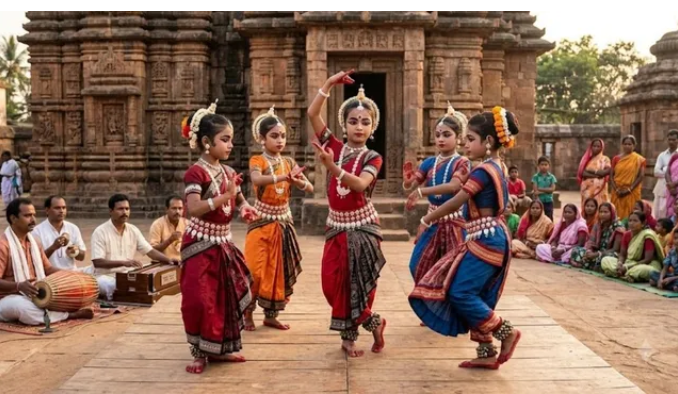
Puri, Odisha: India is known around the world for its diverse culture and traditional arts. Every state in the country has its own distinctive folk art and dance traditions. When Odisha is mentioned, the classical Odissi dance often comes to mind. However, another unique and historic dance tradition from the state, known as Gotipua, also holds a special cultural identity.
The most distinctive feature of Gotipua dance is that young boys dress as women and perform on stage. Traditional makeup, colourful costumes, expressive gestures and challenging dance movements make this art form different from many other dance styles.
Gotipua dance is believed to have originated around the 16th century. Following the decline of the Devadasi, or Mahari, tradition, young boys began performing in female attire to continue the religious and cultural dance tradition. Over time, this art form became an important part of Odisha’s cultural identity.
Gotipua dance is also closely associated with the tradition and development of Odissi dance. It represents a beautiful combination of music, अभिनय, dance and devotion. Many performances are based on stories and episodes related to Lord Krishna, Radha and other religious themes.
What Does the Word Gotipua Mean?
The word Gotipua comes from the Odia language. ‘Goti’ means one or single, while ‘Pua’ means boy. It is believed that in the early period, the dance was performed by a single boy, which is why it came to be known as Gotipua.
Over time, the style of presentation evolved. Today, Gotipua dance is performed both as a solo and in groups. Several artists can perform together on stage, displaying their skills in rhythm with music.
Young Boys Perform the Dance
Gotipua performers are generally young boys. They wear traditional costumes similar to those worn by female performers and use special makeup. Their facial expressions, hand gestures and body movements play an important role in making the performance visually expressive and engaging.
One of the most striking features of this art form is the performers’ exceptional physical flexibility. During their performances, they create several difficult and visually impressive poses. For this reason, artists receive specialised training from a young age.
A Centuries-Old Tradition That Continues Today
The Gotipua dance tradition continues to survive in different parts of Odisha even today. Through the guru-disciple tradition and various cultural institutions, younger generations are being trained in this historic art form.
Gotipua is not merely a folk dance; it is an important part of Odisha’s cultural and historical heritage. This centuries-old tradition continues to attract audiences because of its unique style of presentation, devotional spirit and artistic excellence. This is why Gotipua remains one of Odisha’s traditional art forms that continues to be recognised across India and around the world.