

Washington, USA
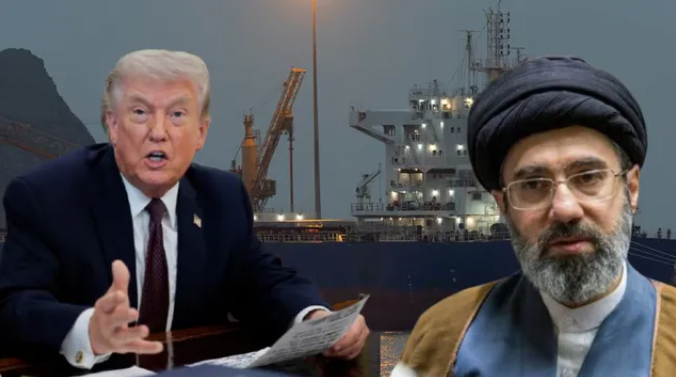
The Strait of Hormuz has emerged as the biggest strategic flashpoint in the ongoing war between the United States and Iran. US President Donald Trump said on Wednesday that the United States has complete control over the critical maritime route and intends to maintain that control. He described the US naval deployment as a “wall of steel” and made strong remarks about Iran’s military capabilities.
In a social media post, Trump warned Iran that the United States was prepared to respond to any action taken by Tehran. He also said that Iran could no longer maintain the same level of influence in the Middle East as it had in the past.
Iran, however, has rejected the US president’s claim. Tehran says the decision to reopen the Strait of Hormuz will depend on Iran’s conditions and Washington’s next steps. Iran has accused the United States of increasing military pressure in the region and has insisted that its demands must be addressed.
Maritime Traffic in the Strait of Hormuz Nearly Halted
The Strait of Hormuz is one of the world’s most important energy routes. Before the war, around 130 to 140 ships passed through the waterway every day. However, reports indicated that only eight vessels crossed the strait on Tuesday.
Such a sharp decline in vessel traffic could have a direct impact on global maritime trade and energy supplies. Shipping companies are considering alternative routes and additional security measures in response to the military risks.
No Agreement Yet on US-Iran Talks
Alongside the military tensions, diplomatic efforts are also continuing. Pakistan is attempting to facilitate the resumption of talks between the United States and Iran. Pakistani Interior Minister Mohsin Naqvi visited Tehran and held meetings with Iranian President Masoud Pezeshkian and other senior officials.
Pakistan says it is working with regional countries to seek a political solution aimed at ending the war. However, several major issues remain unresolved and no comprehensive agreement has yet been reached.
Rising Threat in the Red Sea as Well
Meanwhile, attacks on vessels in the Red Sea and Bab el-Mandeb have also raised concerns. The Iran-backed Houthi group has been accused of targeting a commercial vessel. Reports said that six people were killed in the incident.
The development has raised fresh questions about the security of major maritime trade routes. If risks remain elevated for an extended period in both the Strait of Hormuz and Bab el-Mandeb, global shipping costs and energy prices could face additional upward pressure.
Oil Market Also Keeping a Close Watch
Developments in the Middle East continue to influence international oil markets. On Wednesday, Brent crude rose to around $88.91 per barrel. Markets are closely watching the trajectory of the war, vessel traffic through the Strait of Hormuz and the next phase of US-Iran diplomatic efforts.
The United States claims that it has established a strong naval position in the Strait of Hormuz, while Iran appears unwilling to back down from its demands. This confrontation could determine the direction of both regional security and global energy markets in the coming days.
For now, there is still hope that talks could move forward through Pakistan’s mediation. However, there are no clear signs of a significant reduction in military tensions on the ground. A return to normal vessel traffic through the Strait of Hormuz will be one of the clearest indicators of whether the crisis is genuinely moving toward de-escalation.