

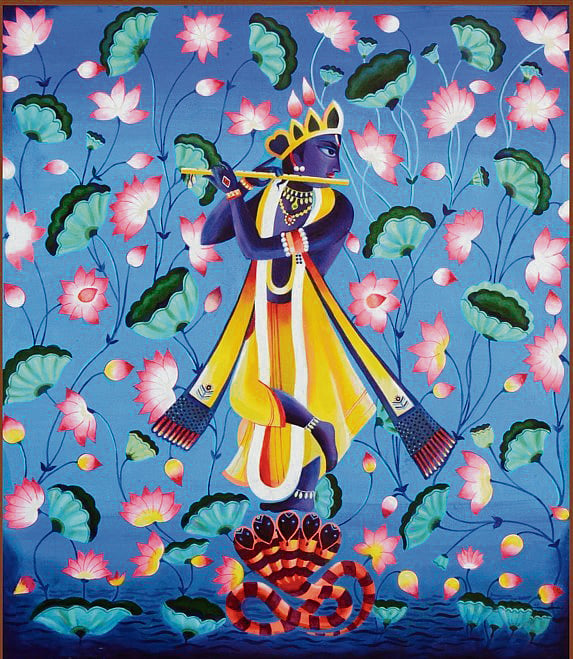
The story from the Srimad Bhagavata Purana shows how pride can separate devotees from God, while humility brings Him near.
The Gopis and Krishna’s Evening Dance
In the Srimad Bhagavata Purana, it is told that when the gopis of Vrindavan heard Sri Krishna playing his flute in the evening by the bank of the Yamuna, they stopped everything and hurried to him. They began to dance, and Krishna danced with them. Each gopi believed Krishna was dancing only with her, which made them proud, thinking they were special to him. However, when pride appeared, Krishna vanished. This shows that when a devotee becomes proud of their closeness to God, they lose Him.
The Gopis’ Search and Imitation of Krishna
Realizing Krishna was gone, the gopis felt sorrow and searched the nearby forest but could not find him. They asked the trees about Krishna’s presence but had no success. They lamented that in their foolish pride, they thought Krishna belonged to them, so he left them as a punishment.
Unable to find Krishna, the gopis began imitating him. One acted as the demoness Putana, another as the infant Krishna. They mimicked how Krishna would call cows, play his flute, and enjoy games with Balarama and friends.
One gopi tied another with a flower garland, saying the boy had broken butter pots and stole butter. Another covered her face as a fearful Krishna. Yet another said, “Do not fear wind and rain, I will protect you,” lifting her shawl like Krishna lifting Mount Govardhana. Another placed her foot on a gopi’s head, imitating Krishna’s act of driving away the serpent Kaliya.
Krishna’s Return and the Lesson of Humility
After this, Sri Krishna appeared smiling before the gopis. The story teaches that as long as one holds ego, God remains lost. Only by forgetting oneself and remembering God alone does He reveal Himself.
Rumi’s Parable on Ego and Unity with God
The Persian poet Rumi wrote of a man who came to his beloved’s door and knocked. When asked, “Who is there?” he said, “It is I.” The voice said, “There is no room here for both me and you,” and the door stayed shut. After a year, the man returned. When asked again, he said, “It is You,” and the door opened. This parable reflects the same truth: the ego must vanish to unite with God.