

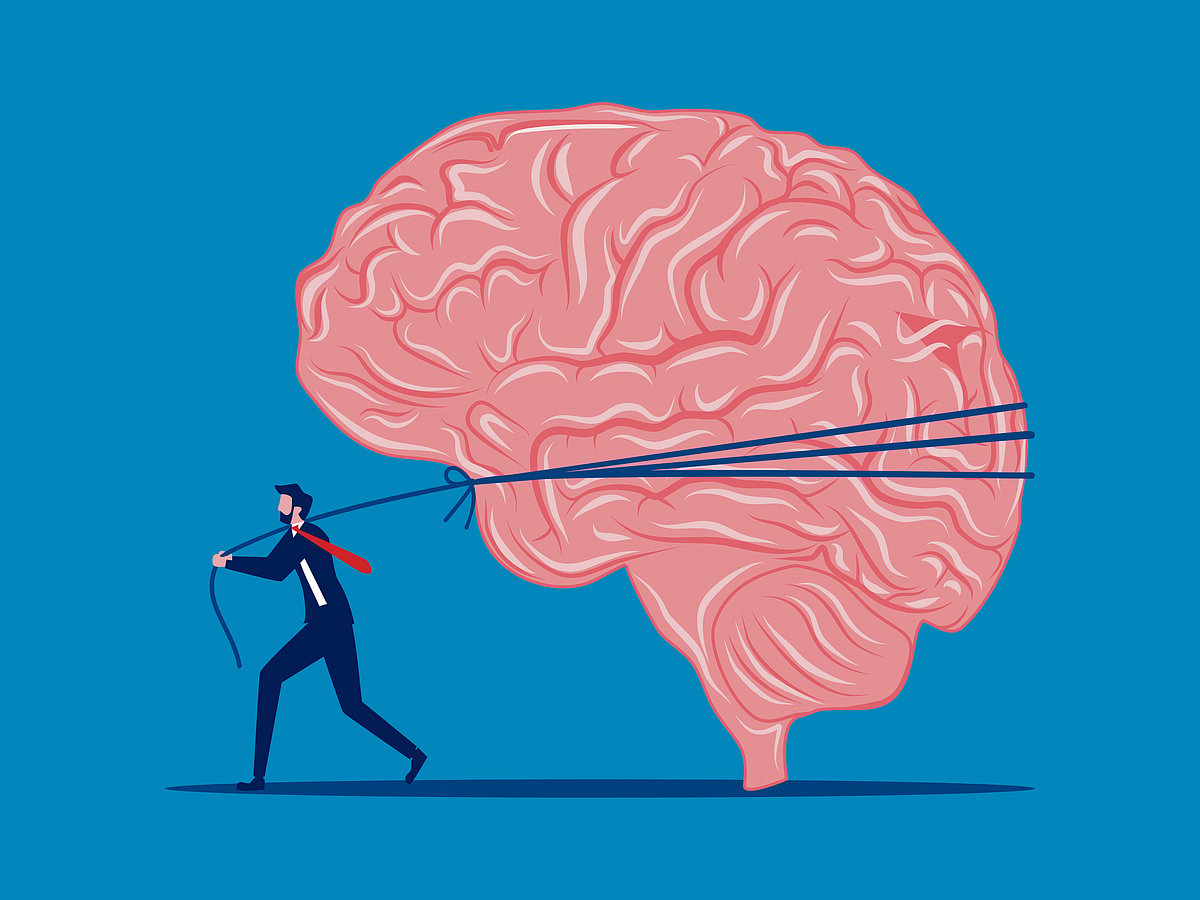
A woman’s struggle with an uncontrollable hand in 1908 introduced the first documented case of alien hand syndrome, challenging our understanding of free will. Since then, cases and research have revealed how much of human behavior may be driven by brain activity beyond conscious control.
Early Case of Alien Hand Syndrome
In 1908, a 57-year-old woman experienced her left hand seemingly acting on its own, tightening around her throat. Despite struggling, she could not control or predict the hand’s movements until it finally relaxed. This incident marks the first known patient with what is now called alien hand syndrome.
Brain Malfunctions and Behavior
While she survived, others have not been as fortunate when brain circuits malfunction. In 1966, Charles Whitman killed multiple people, and an autopsy revealed a brain tumor near his amygdala, the area regulating fear and aggression. Though a direct link to his actions was unclear, the connection between brain function and behavior raised important questions.
Two decades later, Kenneth Parks, a Canadian man, killed his mother-in-law while sleepwalking, leading to his acquittal. Unlike Whitman, his case clearly demonstrated how brain activity outside conscious awareness could drive actions.
Challenging the Idea of Free Will
If our bodies can act without our awareness or control, how much of what we call choice is truly ours? Human behavior depends on neural circuitry, shaped by factors beyond our independent control.
In the 1980s, neuroscientist Benjamin Libet showed brain activity beginning before participants consciously decided to move. Although interpretations differ, these findings suggest the conscious self may not initiate decisions.
Robert Sapolsky and Sam Harris have also highlighted how neurons operate based on biological causes and how we cannot choose the decisions we will make.
Determinism vs. Destiny
Determinism differs from destiny: while destiny implies fixed outcomes regardless of effort, determinism involves results shaped by every step, including conscious reasoning. Our role shifts from full authorship of our lives to participation in a chain of causes.
Non-Duality and Dissolving Free Will
Teachers like Nisargadatta Maharaj, Ramesh Balsekar, and Rupert Spira argue that believing in a separate self creates the illusion of free will. According to Spira, “the idea of free will dissolves” once the separate self is seen through.
Compassion Over Blame
If free will is largely illusory, the compassionate response replaces punishment with understanding. Just as epilepsy is treated rather than scolded, violent behavior rooted in brain circuitry shaped by uncontrollable forces should be approached with care rather than blame.
While imprisonment may be necessary for safety, recognizing the causes behind behavior helps us respond more wisely.
Accepting the Illusion
Knowing intellectually we lack free will does not eliminate the illusion; overcoming it would require free will itself. Perhaps the illusion is necessary, but awareness of it can help us avoid its traps, similar to seeing the physics behind a mirage.
We cannot choose our genes or early environment, but we can choose to understand rather than judge the neural circuitry they produced.
Understanding Behavior as Circuitry
In 2002, Hedden and Zhang found that people attribute intentions to opponents in games even when they know the opponent follows fixed rules. This shows our tendency to assign agency, even when none exists. Thus, focusing on fixing brain wiring compassionately is more helpful than blaming individuals.
Practicing Non-Narrative Awareness
We can practice meeting life without the autobiographical self by assuming the stance of a silent observer of thoughts, sensations, and experiences. Carrying this perspective into daily life fosters patience and compassion.
Building Compassionate Understanding
Seeing beyond the personal narrative and recognizing behavior as brain circuitry allows us to meet others with empathy. This approach helps create a world free from the harms the illusion of free will would cause if left unexamined.