

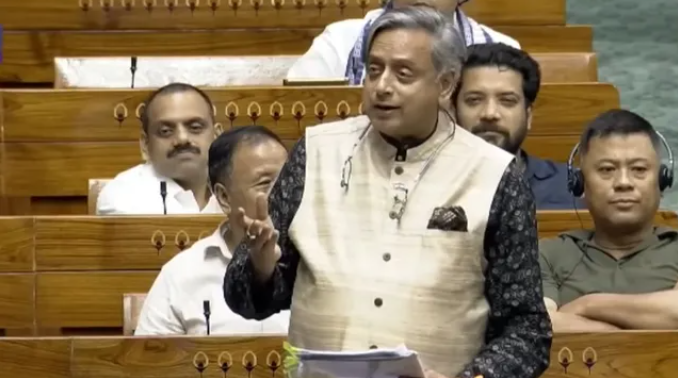
New Delhi, Delhi Senior Congress leader and Member of Parliament Shashi Tharoor has strongly criticized the Centre’s proposed Foreign Contribution (Regulation) Act (FCRA) Amendment Bill, 2026, arguing that the legislation could significantly alter the relationship between the Indian state and civil society. He said the proposed amendments may adversely affect the functioning of non-profit organizations, research institutions, and other independent bodies operating across the country.
Tharoor Raises Concerns Over Proposed FCRA Amendment
In an opinion article published in an English daily, Tharoor alleged that the proposed legislation would lead to excessive centralization of executive powers. According to him, the amendments could make it more difficult for non-governmental organizations (NGOs), academic institutions, think tanks, and human rights groups to carry out their activities, particularly those that rely on foreign contributions for developmental and humanitarian work.
Civil Society and NGOs Could Face Challenges
Tharoor emphasized that civil society plays a vital role in a democratic system by supporting public welfare, encouraging policy dialogue, and strengthening accountability. He argued that weakening the operational independence of such organizations could have broader implications for democratic governance and public participation.
The Congress MP further alleged that the current government views non-profit organizations, researchers, and human rights groups as potential sources of foreign influence and instability rather than as partners in national development. He said such an approach risks creating an atmosphere of mistrust and could discourage legitimate social and developmental initiatives undertaken by independent institutions.
Impact on Education, Research, and Humanitarian Work
According to Tharoor, the impact of the proposed amendments would extend beyond a limited number of organizations. He argued that institutions working in sectors such as education, healthcare, scientific research, social development, humanitarian relief, and community welfare could also face operational challenges if the legislation is enacted in its present form.
He expressed concern that stricter regulatory provisions may affect ongoing development projects and social welfare programmes that receive foreign funding through legally approved channels. Tharoor maintained that while transparency and accountability are important, regulatory measures should not unnecessarily restrict the functioning of organizations engaged in public service.
Government Yet to Issue Detailed Response
However, the Central Government has not yet issued a detailed official response specifically addressing Tharoor’s criticism of the proposed FCRA Amendment Bill, 2026. In previous statements regarding the FCRA framework, the government has consistently maintained that the law is intended to ensure transparency in the receipt and utilization of foreign contributions, strengthen oversight of foreign funding, and safeguard national security and public interest.
Proposed Bill Likely to Be Debated in Parliament
The proposed legislation is expected to be debated in Parliament, where both the government and the opposition are likely to present their respective arguments on its necessity and potential impact. Lawmakers are expected to examine whether the proposed amendments strike an appropriate balance between regulatory oversight and the operational independence of civil society organizations.
Political observers note that the parliamentary debate will be closely watched by NGOs, policy experts, legal scholars, and development organizations. The final provisions of the Bill could have significant implications for the regulation of foreign-funded institutions in India and the future role of civil society organizations in the country’s development landscape.