

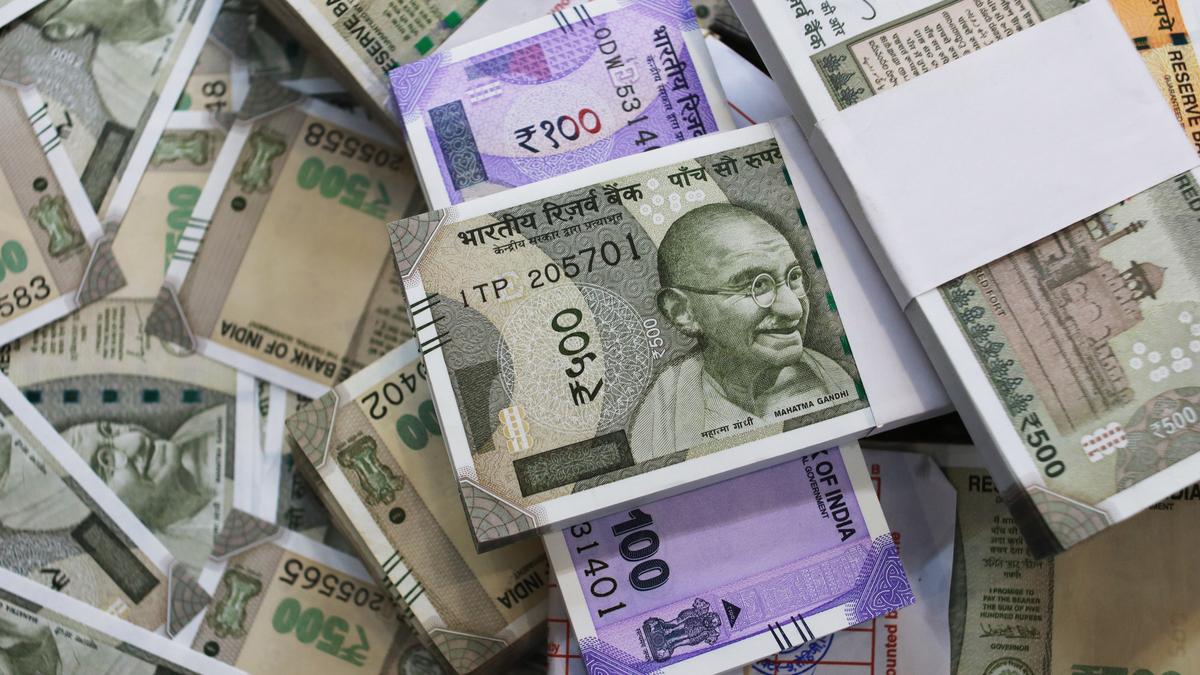
Mumbai, Maharashtra: The Indian rupee weakened by 16 paise to close at ₹95.24 against the U.S. dollar on Tuesday, according to market reports.
Forex traders attributed the decline mainly to a recovery in the U.S. dollar index and continued foreign fund outflows.
However, softer crude oil prices provided some support to the Indian currency and limited its losses.
Why Did the Rupee Fall?
The U.S. dollar has recently shown signs of strength against several emerging-market currencies.
This has put additional pressure on the Indian rupee.
Another factor is the continued movement of foreign funds out of Indian financial markets. Foreign portfolio investment flows can influence demand for the rupee and the U.S. dollar.
Falling Crude Oil Prices Offer Some Relief
Lower crude oil prices provided some support to the rupee during the session.
India depends heavily on imported crude oil. Therefore, cheaper oil can reduce the country’s import bill and ease pressure on the current account and trade balance.
When crude prices fall, Indian importers generally need fewer dollars to pay for oil purchases.
This can help reduce pressure on the rupee.
Dollar Strength Remains a Key Factor
Market participants are closely watching the direction of the U.S. dollar index.
A stronger dollar can put pressure on emerging-market currencies, including the Indian rupee.
Global investors are also monitoring the U.S. Federal Reserve’s monetary policy outlook, as changes in U.S. interest-rate expectations can influence capital flows and currency markets.
Foreign Fund Flows in Focus
Foreign investment flows remain another important factor for the rupee.
Investors are closely tracking whether foreign capital continues to leave Indian equity and debt markets or returns to domestic assets.
Recent market analysis suggests that foreign inflows alone may not be enough to trigger a significant recovery in the rupee in the near term.
Geopolitical Developments Could Add Volatility
Global geopolitical developments can also influence currency markets.
Changes in oil prices, international trade conditions and regional conflicts can quickly affect investor sentiment.
As a result, forex traders are expected to remain cautious in the near term.
What to Watch for the Rupee
Several factors could influence the rupee’s movement in the coming sessions:
- U.S. dollar strength
- Crude oil prices
- Foreign capital flows
- Federal Reserve policy expectations
- Geopolitical developments
- Domestic economic data
- RBI market intervention
The Reserve Bank of India has also been active in the foreign exchange market to manage excessive volatility. Recent trading has shown the currency remaining sensitive to oil prices and global risk sentiment.
Rupee Outlook
The Indian rupee is likely to remain sensitive to global developments in the near term.
A stronger dollar or higher crude prices could increase pressure on the currency. On the other hand, lower oil prices, improved foreign inflows and a weaker dollar could provide support.
For now, traders are expected to closely monitor oil prices, U.S. monetary policy, foreign fund flows and global geopolitical developments before taking a view on the rupee’s next move.