

New Delhi, Delhi
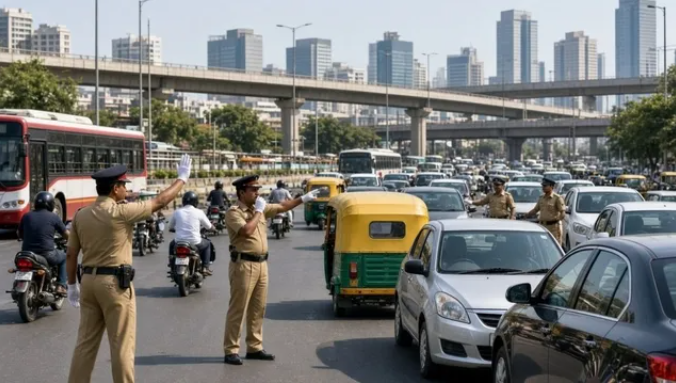
To tackle the growing problem of traffic congestion in Delhi, the Traffic Police is preparing to change its strategy. Under the new approach, sensitive locations and areas prone to traffic jams will be identified in advance, with increased monitoring at these hotspots. The police will also strengthen coordination with various government departments and concerned agencies to improve traffic management and ensure smoother movement on the roads.
On Monday, Delhi Lieutenant Governor Taranjit Singh Sandhu visited the Delhi Traffic Police headquarters in Todapur and reviewed the city’s traffic management system. During the meeting, officials briefed him on the traffic congestion situation in the capital, road safety, and measures being taken to improve traffic management.
Highlights
- Delhi Traffic Police will monitor locations prone to congestion in advance.
- The Lieutenant Governor reviewed traffic management and road safety measures.
- Greater coordination among different departments and agencies was emphasized.
- Technology-based traffic management preparations for the BRICS Summit were also discussed.
Congestion Hotspots to Be Identified in Advance
Under the new strategy, locations where traffic pressure regularly increases or congestion occurs at specific times will be identified in advance. Traffic personnel will be deployed at these hotspots beforehand to manage vehicle movement and prevent major disruptions.
The objective is to prevent traffic jams before they occur rather than responding only after congestion has already developed. To achieve this, the monitoring of traffic patterns, vehicle density, and conditions on sensitive routes will be strengthened.
Better Coordination With All Agencies
Delhi’s traffic management does not depend solely on the Traffic Police. Construction work, encroachments, damaged roads, parking problems, and other civic issues can also have a direct impact on traffic movement.
Keeping this in mind, the Traffic Police will work more closely with relevant departments and agencies. Greater emphasis will be placed on sharing information between authorities and carrying out coordinated action at locations where traffic-related problems are identified.
Road Safety Also a Priority
The review meeting also focused on road safety in addition to traffic congestion. Officials discussed measures to identify accident-prone locations, improve compliance with traffic rules, and ensure safer movement for commuters.
The Traffic Police aims to make more effective use of technology and surveillance systems not only for traffic management but also to help reduce road accidents and improve overall road safety.
Preparations for BRICS Summit Reviewed
Preparations for Delhi’s traffic management during the BRICS Summit were also reviewed during the meeting. The movement of VIPs and foreign delegations during the summit is expected to increase traffic pressure on several important routes in the capital.
In such circumstances, technology-based traffic management, route planning, and real-time monitoring of traffic conditions will play an important role. The Traffic Police aims to ensure that traffic arrangements remain smooth during the major international event while minimizing inconvenience to ordinary commuters.
With the number of vehicles in Delhi continuing to rise, traffic management remains a major challenge for the police and administration. The advance identification of congestion hotspots and improved coordination among different agencies are expected to help reduce traffic jams and make road travel more efficient in the capital.