

Kathmandu, Nepal
Nepal’s government is facing questions over the whereabouts of the original document of the 1816 Sugauli Treaty, a historic agreement that played a major role in defining Nepal’s territorial boundaries with British India.
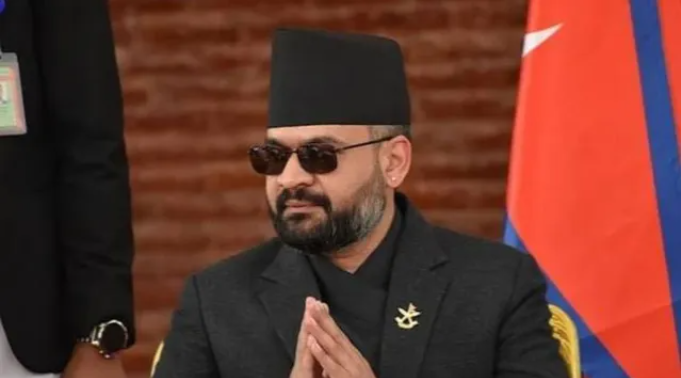
Foreign Minister Shishir Khanal told Nepal’s House of Representatives that the government does not have clear information on whether it still possesses the original official copy of the treaty. He said records related to the 1816 agreement are available in Nepal’s National Archives, but it has not been confirmed whether these include the original treaty document.
The disclosure has attracted attention at a time when territorial issues between Nepal and India remain sensitive, particularly over areas including Kalapani, Lipulekh and Limpiyadhura.
What Did the Foreign Minister Say?
Khanal made the remarks while responding to a question in Parliament concerning Nepal’s historical treaties. According to reports from Nepalese media, the government has documents connected to the Sugauli Treaty in its archives, but officials have not been able to establish with certainty whether the original signed government copy is among them.
The uncertainty has also been reported in relation to the 1950 Nepal-India Treaty of Peace and Friendship, with questions being raised over the availability of original copies of both historic agreements.
The issue has prompted renewed discussion about the preservation and management of Nepal’s historical diplomatic records.
Why Is the Sugauli Treaty Important?
The Sugauli Treaty was signed in the aftermath of the Anglo-Nepalese War of 1814-16. The agreement was initially concluded in December 1815 and ratified by Nepal on March 4, 1816. It marked an important turning point in relations between Nepal and British India and played a major role in determining Nepal’s territorial boundaries.
The treaty resulted in Nepal ceding significant territories to the East India Company. It also established arrangements governing relations between the two sides.
Because the agreement formed an important historical basis for the boundary between Nepal and British India, its records remain significant for historians, diplomats and experts studying the evolution of the India-Nepal border.
Border Dispute Adds to the Significance
The issue of the original document has gained additional importance because of the longstanding disagreement between India and Nepal over Kalapani, Lipulekh and Limpiyadhura.
Nepal has maintained claims over these areas, while India has rejected those claims. The interpretation of historical agreements, maps and other boundary records forms part of the broader discussion surrounding the dispute.
However, the uncertainty over Nepal’s original copy of the Sugauli Treaty does not by itself determine the legal status of the disputed territories. Historical boundary questions involve multiple records, maps, subsequent agreements and other evidence.
Focus on Historical Records
The latest disclosure has therefore shifted attention towards Nepal’s archival records and the need to establish exactly which documents relating to the 1816 treaty remain available.
The existence of archival records means that the treaty has not simply disappeared from historical documentation. The key question is whether Nepal possesses the original official copy or only later records, reproductions or related correspondence.
The development could encourage further efforts to locate and authenticate historical documents connected with the treaty. Such records could be relevant to historians and policymakers examining the evolution of the Nepal-India boundary.
India and Nepal have continued to use diplomatic and bilateral mechanisms to discuss border-related matters. India has also indicated that questions concerning the original Sugauli Treaty copy can be discussed through existing bilateral mechanisms.
For Kathmandu, the episode has highlighted the importance of preserving key historical treaties and diplomatic records—particularly documents that continue to have relevance in contemporary foreign policy and border discussions.