

New Delhi, Delhi
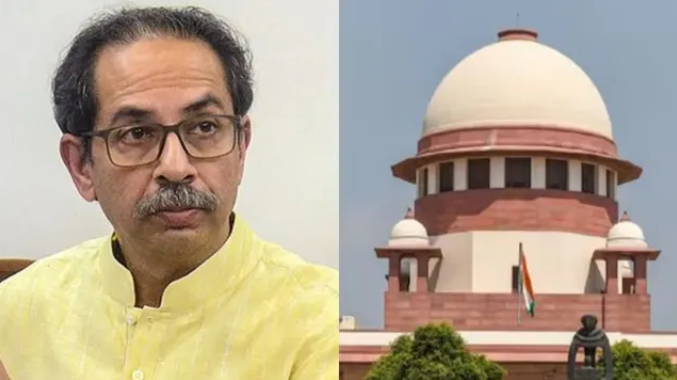
The Shiv Sena (UBT) has told the Supreme Court that constitutional provisions cannot be interpreted in a manner that encourages the very political defections that the anti-defection law was enacted to prevent.
The argument was made during the hearing of a case concerning the political dispute within the Shiv Sena. A bench headed by Chief Justice of India Surya Kant is hearing the matter. Justices Joymalya Bagchi and V. Mohana are also part of the bench.
The case is linked to the Election Commission’s decision recognising the Eknath Shinde faction as the real Shiv Sena and awarding it the party name and the bow-and-arrow election symbol.
What Did Uddhav Thackeray Faction Argue?
Senior advocate Kapil Sibal appeared for the Shiv Sena (UBT) during the fifth day of the hearing. He argued that the question of whether a political party has split and the question of disqualification of an individual legislator are separate legal issues.
Sibal submitted that subsequent developments may be relevant when considering disqualification, but those later events should not be used to determine whether an actual split in the political party had taken place.
The argument is significant because the dispute involves the interpretation of constitutional provisions dealing with political defections and the authority of constitutional bodies in deciding questions arising from a party split.
Focus on the Purpose of the Anti-Defection Law
The central argument of the Uddhav Thackeray faction is that the purpose behind the anti-defection provisions must be kept in mind while interpreting the Constitution.
The anti-defection framework was introduced to discourage elected representatives from changing political parties in a manner that undermines the mandate received by voters. The provisions are intended to promote political stability and discourage defections that can alter the composition of elected governments.
The Shiv Sena (UBT) has argued that if constitutional provisions are interpreted in a way that effectively legitimises or encourages political defections, it could undermine the very purpose for which the anti-defection provisions were introduced.
During the hearing, the faction relied on this principle to challenge the interpretation of the relevant constitutional provisions in the context of the Shiv Sena dispute.
Dispute Over Election Commission Decision
The larger legal dispute also concerns the Election Commission’s decision to recognise the Eknath Shinde faction as the Shiv Sena. Following its decision, the faction was allowed to use the Shiv Sena name and the bow-and-arrow symbol.
The rival Uddhav Thackeray faction has challenged the developments surrounding the party split and the subsequent recognition of the Shinde faction.
The Supreme Court is examining important constitutional and legal questions arising from the dispute, including issues concerning political defection, disqualification and the interpretation of constitutional provisions.
Why the Case Is Significant
The case has implications beyond the internal dispute within the Shiv Sena because it involves questions about how the anti-defection framework should operate in situations where a political party faces an internal split.
The arguments before the Supreme Court also raise broader questions about the relationship between constitutional interpretation, legislative intent and the protection of the electoral mandate.
The court will consider the competing legal arguments as the hearing progresses. Further proceedings are expected to provide greater clarity on the constitutional questions surrounding party splits, defections and the role of institutions such as the Election Commission in determining the status of rival political factions.