
Karti P. Chidambaram Asserts Congress and DMK Can Continue Collaboration in Parliament
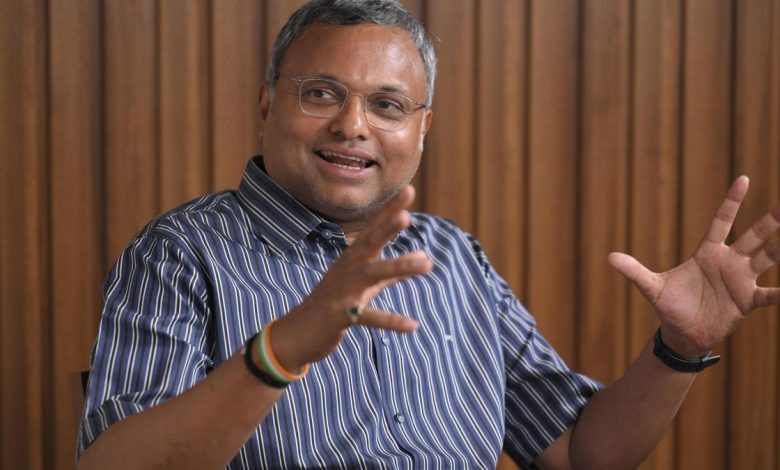
In a recent statement, Karti P. Chidambaram, a prominent Congress Member of the Lok Sabha, emphasized that the Congress party remains committed to collaborating with various opposition parties in Parliament despite facing competition at the state level. Highlighting the pragmatic approach of political alliances, Chidambaram pointed out that the Congress continues to work effectively alongside the Communist Party of India (Marxist) or CPI(M) and the Trinamool Congress at the national level, even though these parties contest fiercely against each other during state elections.

Addressing the current political climate, Chidambaram narrated how cooperation among opposition parties plays a crucial role in strengthening democratic discourse in Parliament. “Political contests at the state level are expected between parties with differing platforms. However, when it comes to legislative matters and national issues, it is necessary to set aside these differences and work collectively,” he stated. This collaborative spirit is instrumental in amplifying the voices against policies that the opposition parties disagree with, thus contributing to a more balanced parliamentary environment.
The Lok Sabha member’s remarks come amid rising speculation about the stability and coherence of opposition alliances ahead of forthcoming national elections. By citing the example of ongoing cooperation with CPI(M) and Trinamool Congress — both significant pillars of the opposition bench — Chidambaram underscores the potential for a united opposition front. This unity is viewed as pivotal in presenting credible alternatives to the ruling parties and ensuring robust debate during legislative sessions.
Political analysts also note that working together in Parliament despite competition in state politics reflects a mature understanding of India’s federal structure and political diversity. It allows parties to juggle local ambitions with national interests effectively. “Such partnerships are a testament to the commitment of leaders who prioritize democratic values and governance over electoral rivalry,” said an expert familiar with parliamentary affairs.
In conclusion, Karti P. Chidambaram’s comments reaffirm that opposition unity within Parliament is not just a strategy but a necessity for functioning democracy. Continuation of this cooperation among Congress, DMK, CPI(M), and Trinamool Congress signals a promising direction towards collective political action and constructive policy debate in Indian politics.