

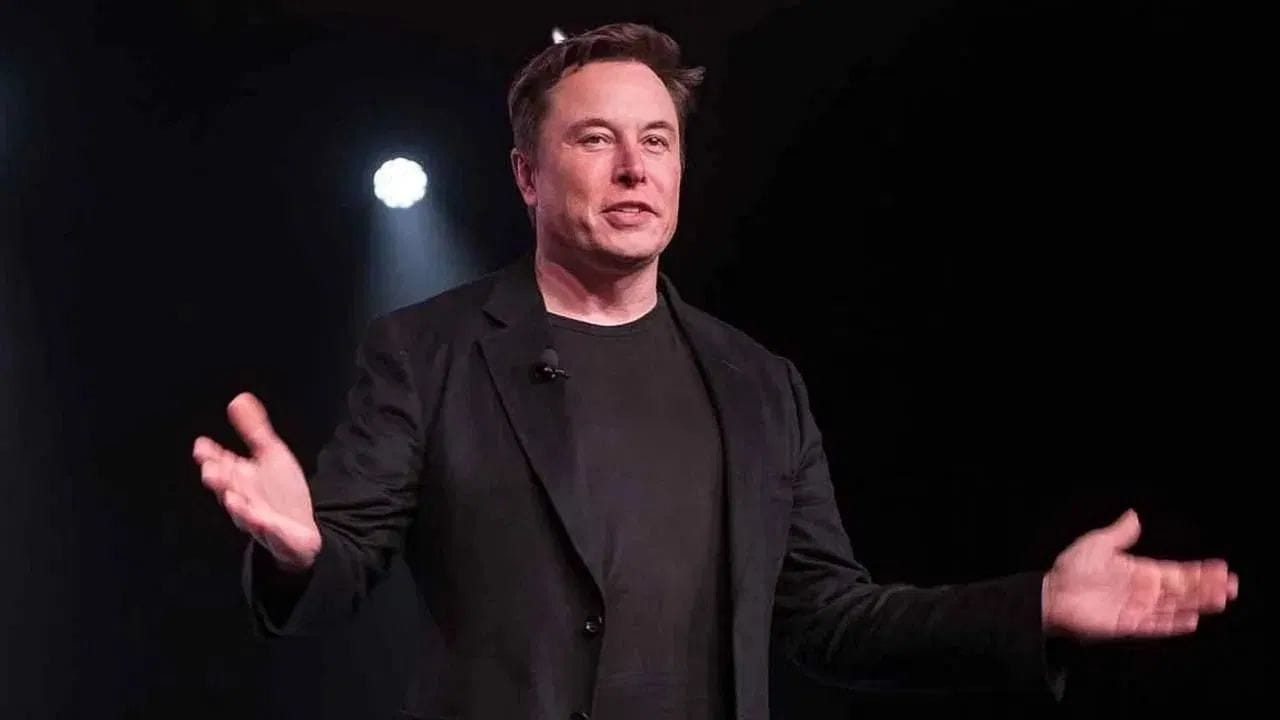
Elon Musk predicts a future where artificial intelligence (AI) and robots will perform most human jobs, potentially freeing people from the need to work for survival. Speaking at the All-In Summit, Musk described this shift as a path toward what he calls a “universal high income,” where technology provides abundant goods and services for a better life.
Robots and AI Transforming Work
Musk explained that AI combined with Tesla’s humanoid robot, Optimus, could take over many tasks, including physical labor and office duties. Data processing and other technical jobs could increasingly rely on AI, changing the role of human workers. As machines handle large-scale production and services, people might choose work as a personal preference rather than a necessity.
According to Musk, this technological revolution could reduce costs in sectors like manufacturing, transportation, agriculture, and healthcare. This would make essential goods and services more accessible to a greater number of people. He envisions a future where technology-driven abundance enables easier and improved living standards.
Challenges of Economic Distribution
Musk differentiated his idea from the common concept of Universal Basic Income (UBI), which provides a fixed monetary support to cover basic needs. His vision, called “universal high income,” goes beyond cash transfers by focusing on the widespread availability of goods and services thanks to automation and AI.
However, Musk acknowledged that this future comes with significant challenges. The increasing use of automation could lead to job losses, creating economic uncertainty for those who rely on wages to support their families. The critical question remains about how the income generated by automated work will be distributed—whether it will benefit only the owners of AI and robots or reach the broader population.
He admitted that this transition will not be easy. Musk referred to it as a journey full of ups and downs, requiring society to find solutions for employment, income, and economic security alongside advancing technology.
While AI and robotics could simplify many tasks, the issue of equitable wealth distribution must be addressed for everyone to benefit. The balance between technological progress and social fairness remains uncertain and critical for the future.
These insights highlight both the potential and risks of an AI-driven economy. Musk’s predictions challenge policymakers and citizens alike to rethink the nature of work and income in the coming years.