

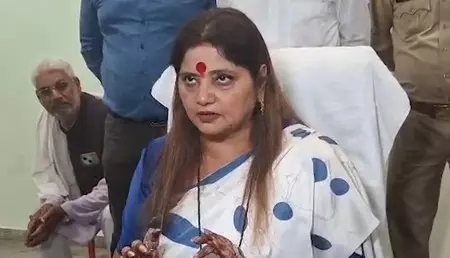
Agra. Babita Chauhan, Chairperson of the Uttar Pradesh State Women’s Commission, stated that domestic violence complaints remain the most frequent cases reported to the commission. She highlighted concerns over police handling of such issues, noting that many minor complaints could be resolved quickly at the police station if approached with sensitivity and promptness. Chauhan encouraged women and their families to remain aware of their rights and assured that every complaint reaching the commission will be thoroughly addressed.
Domestic Violence Cases and Police Response
Babita Chauhan emphasized that domestic violence accounts for the highest percentage of women-related grievances. However, she noted a shift in how complaints are filed. Many women prefer not to pursue legal action but seek mediation or relief from the person causing them distress. This trend points to a desire for faster, less legalistic solutions.
Addressing delays in complaint resolution, Chauhan assured there is no postponement from the commission’s side. She mentioned that over 100 applications have been received and assured that each will be resolved fully. However, she acknowledged delays in police action, attributing these to procedures and a lack of urgency. Many small matters could potentially be resolved in minutes but often go unaddressed, forcing victims to take their grievances to the commission for justice.
Need for Police Sensitivity and Support
Chauhan appealed to police officials to listen attentively to those who visit stations, providing reassurance. She observed that even just a brief two-minute hearing can provide relief to the complainant by creating an impression that their case will be handled seriously. She stressed that police need to adopt a more friendly and supportive attitude. Although the commission receives cooperation from officers, the increase in complaints is partly due to a lack of proper attention at the police level.
She credited rising awareness among women for the growing number of complaints. Access to helpline numbers and initiatives like Mission Shakti have informed women about available support, prompting even minor issues to be reported to police or the commission. Both bodies strive to resolve complaints at their respective levels.
Chauhan also advised families and parents to stay vigilant. Referring to a case in Mathura, she described a woman subjected to severe mistreatment by her in-laws. Despite this, her family sent her back to the marital home under social pressure. After repeated abuse, the family was still willing to send her back. She questioned whether parental responsibilities end after marriage and urged families to recognize ongoing suffering and avoid forcing girls to return to abusive situations.
Another example involved a recently married woman who had to return home four times in four months but was compelled to go back each time. Chauhan remarked that no woman should face lifelong punishment due to a wrong relationship. She highlighted cases where intermediaries vanish when difficulties arise, while girls bear the consequences. Parents should support their daughters and understand their rights.
Babita Chauhan urged girls to make thoughtful, well-informed life decisions and remain aware of their rights. She emphasized avoiding rushed choices and encouraged women to stand up for themselves in difficult circumstances.