

New Delhi, Delhi
Supreme Court Justice BV Nagarathna has stressed the need to ensure that women receive legal assistance immediately after an incident, saying access to justice should not remain confined to courtrooms. She called for stronger arrangements to provide timely legal support at police stations and hospitals so that women can understand their rights and available legal remedies at an early stage.
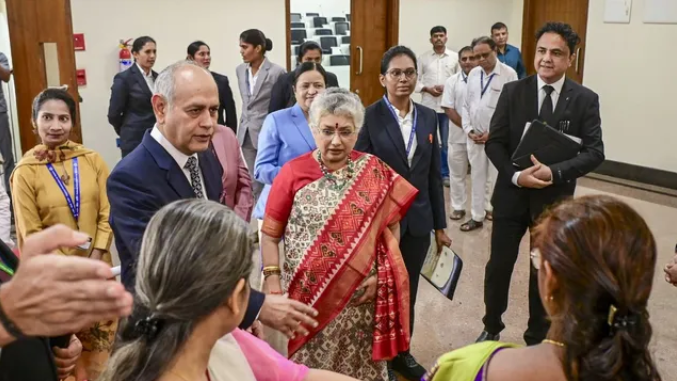
Justice Nagarathna was speaking on Saturday at the inaugural session of a southern regional conference organised by the National Commission for Women (NCW) in collaboration with the Karnataka High Court and the Karnataka Judicial Academy. The conference focused on the theme “Justice for Women” and brought attention to the need for improving the delivery of legal assistance to women at the grassroots level.
Emphasising the importance of timely intervention, Justice Nagarathna said women should have access to legal help soon after an incident. Early legal advice can help victims understand their rights, the remedies available to them and the procedures they may need to follow. She therefore called for expanding legal assistance beyond courts and strengthening its availability through institutions that women are likely to approach immediately after an incident.
Better coordination between police, hospitals and legal services
Justice Nagarathna suggested developing a stronger institutional framework involving state legal services authorities, the police and the healthcare system. She emphasised the need for effective coordination between these institutions, including at the taluka level.
She also highlighted the importance of connecting primary health centres, government hospitals in rural areas and police stations with legal services institutions. Such coordination, she said, could help reduce delays in providing legal information and guidance to women who need assistance after an incident.
The emphasis on hospitals and police stations is particularly significant because these are often among the first points of contact for women following incidents requiring medical, police or legal intervention. A coordinated system could help ensure that women are not left without information about the next legal steps.
Justice Nagarathna highlights role of paralegal volunteers
The Supreme Court judge also underlined the role of paralegal volunteers in strengthening access to justice. She said such volunteers should be available at short notice so that women requiring assistance can receive timely support.
Paralegal volunteers can help women understand basic legal procedures and connect them with the appropriate legal services institutions. Strengthening their availability at the local level could therefore play an important role in ensuring that legal assistance reaches women closer to where they live and seek immediate help.
Justice Nagarathna also called for a broader assessment of the effectiveness of legal aid programmes. According to her, measuring the number of people who receive legal assistance alone is not enough. Authorities should also examine the actual outcomes of cases after legal aid has been provided.
4,14,795 women received legal aid in 2025-26
Citing data from the National Legal Services Authority (NALSA), Justice Nagarathna said 4,14,795 women received legal assistance between April 2025 and March 2026. She described the figure as encouraging while stressing that greater attention must be given to the accessibility, timeliness and outcomes of legal aid.
Justice Nagarathna also referred to recent changes in Karnataka concerning the High Court’s jurisdiction over first regular appeals. The issue was raised in the broader context of access to justice and the legal process.
The conference underlined the need for a more responsive legal aid system in which police stations, hospitals, legal services authorities and paralegal volunteers work in coordination. Strengthening these links could help women obtain legal guidance at the earliest possible stage and make access to justice more effective at the grassroots level.