

New Delhi, Delhi
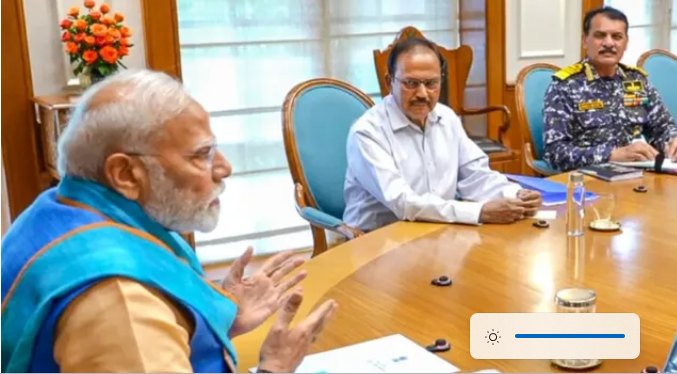
National Security Adviser Ajit Doval has shared important details about the strategic thinking behind Operation Sindoor, explaining how India decided on its response following the terrorist attack in Pahalgam on April 22, 2025, and how the plan to target the terrorist infrastructure was developed.
According to Doval, Prime Minister Narendra Modi immediately reviewed the situation following the Pahalgam attack. The Prime Minister cut short his foreign visit and, upon returning, held a meeting with senior officials. During the meeting, he first emphasized the need to identify those responsible for the attack and gather all available information about them.
Contact Us of Join Now in my Directory
https://mydigi-pro.in/
https://directory.mydigi-pro.in/
https://advocate.mydigi-pro.in/
https://healthcare.mydigi-pro.in/
https://education.mydigi-pro.in/
https://live-brand.com/
The NSA said the Prime Minister’s message was clear: those responsible for the Pahalgam attack would not be spared under any circumstances. According to Doval, the Prime Minister made it clear that India would take action against the terrorists wherever they were.
Following the Prime Minister’s directives, Indian intelligence agencies moved swiftly. The agencies played a crucial role in identifying the terrorists responsible for the attack and gathering information about their networks.
Doval praised the intelligence agencies, saying that significant information was obtained within a very short period. Based on this intelligence, the planning for the retaliatory action was taken forward.
According to Doval, India had decided at an early stage that the focus of Operation Sindoor would be on targeting the terrorist infrastructure linked to the Pahalgam attack. The objective was to weaken the capabilities of the networks and hideouts that India held responsible for the attack.
The terrorist attack in Pahalgam on April 22, 2025, killed 26 people. The attack shocked the entire country and led to a sharp escalation in tensions between India and Pakistan.
Doval said India’s policy toward terrorism is clear. He emphasized that interpreting India’s restraint as weakness would be a serious mistake. India is prepared to take necessary measures to protect its sovereignty and the safety of its citizens.
The NSA also said India cannot accept a situation in which terrorism is supported or effective action is not taken against terrorists. He emphasized that India is capable of and prepared to take decisive measures whenever necessary to safeguard its national security.
Doval also referred to an alleged message conveyed by the terrorists during the Pahalgam attack. According to him, the attackers had told victims to convey a message to Prime Minister Narendra Modi. Doval described this as an attempt by the terrorists to challenge India’s leadership.
He said that such a challenge required a response from India. However, while determining the course of action, particular attention was paid to intelligence inputs and clearly defined targets.
Operation Sindoor was described as the outcome of this strategic approach. According to Doval, the key elements of the operation included targeting terrorist infrastructure, identifying those responsible and sending a clear message regarding India’s national security.
He said India respects the sovereignty of every country but will not hesitate to take necessary steps to protect its national security. India’s restraint, he emphasized, should not be mistaken for weakness.
Doval’s remarks provide new insight into the decision-making process behind Operation Sindoor. According to him, clear directions from the political leadership, swift action by intelligence agencies and well-defined strategic objectives laid the foundation for India’s response following the Pahalgam attack.