

Kathmandu, Nepal
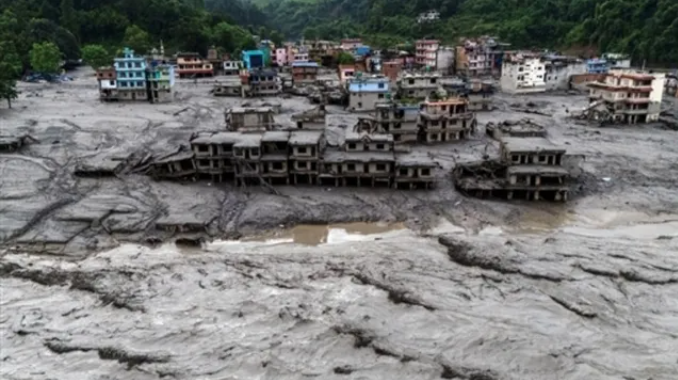
Amid the growing impact of climate change across the Himalayan region, Nepal has put forward a major demand before the international community. Following recent devastating floods, Nepal has said it does not want only relief and humanitarian assistance but climate compensation.
Nepal argues that its contribution to global greenhouse gas emissions is extremely small, yet it is facing increasingly severe natural disasters linked to climate change.
Foreign Minister Shishir Khanal said Nepal would no longer view climate-related disasters solely through the lens of relief assistance. The country wants to shift its diplomatic approach beyond traditional “aid” and focus more strongly on climate justice and compensation.
According to a report by The Kathmandu Post, Nepal has raised the issue internationally and sent its partners a formal climate compensation claim letter. The report also stated that Nepal has sought around $5 billion from the United Nations.
What Is Nepal’s Argument?
Nepal says responsibility for the climate crisis must be addressed. Its argument is that countries that have emitted large amounts of greenhouse gases over decades during their industrial development should bear greater responsibility toward nations that are particularly vulnerable to climate change.
Located in the Himalayan region, Nepal is especially concerned about changes taking place in glaciers and mountain ecosystems. According to the country’s position, changing temperatures and weather patterns are increasing the risks of floods, landslides and other extreme events.
Reference to China, the US and India
Foreign Minister Shishir Khanal referred to China, the United States and India, describing them as among the world’s major industrial emitters. Nepal’s broader question is how the responsibility of countries with higher emissions should be determined toward nations suffering the consequences of climate change.
Nepal maintains that its contribution to global emissions is very small. It therefore argues that there should be a fair international mechanism to address the economic and social losses caused by climate-related disasters.
However, the question of climate responsibility is highly complex. It involves several factors, including a country’s current emissions, historical emissions, per-capita emissions and development requirements.
Floods Described as a ‘Himalayan Tsunami’
Referring to the severity of the recent floods, Nepal’s Foreign Minister rejected the idea of treating the event as an ordinary flood and described it as a “Himalayan tsunami.”
According to Khanal, waves of water reached heights of 20 to 30 metres, while their speed reportedly reached around 180 kilometres per hour. If these figures are independently verified, they would underline the severity of extreme weather events in the Himalayan region.
However, independent scientific verification of such claims remains important before the figures can be treated as established facts.
Melting Glaciers Raise Concerns Over Water Security
Nepal argues that rapid changes in Himalayan glaciers will have consequences extending far beyond mountainous areas. Rivers originating in the Himalayas are a crucial source of water for a large population across South Asia.
Long-term changes in the flow of rivers such as the Ganga and Trishuli could affect agriculture, drinking water, energy production and ecosystems. Nepal is concerned that accelerated glacier melt could increase the risk of sudden flooding in the short term, while potentially affecting water availability over the longer term.
Nepal Wants to Move Beyond Relief Assistance
Nepal’s new position is linked to a broader demand from countries vulnerable to climate change for stronger international financial mechanisms to address loss and damage caused by climate-related disasters.
Kathmandu’s message is clear: financial assistance following a climate disaster should not be viewed solely as charity. Nepal wants to frame the issue in terms of responsibility, compensation and climate justice on international platforms.
The demand could become an increasingly important component of Nepal’s foreign policy and climate diplomacy. It could also intensify international discussions over the growing impact of climate change in the Himalayan region and the future of water security across South Asia.