

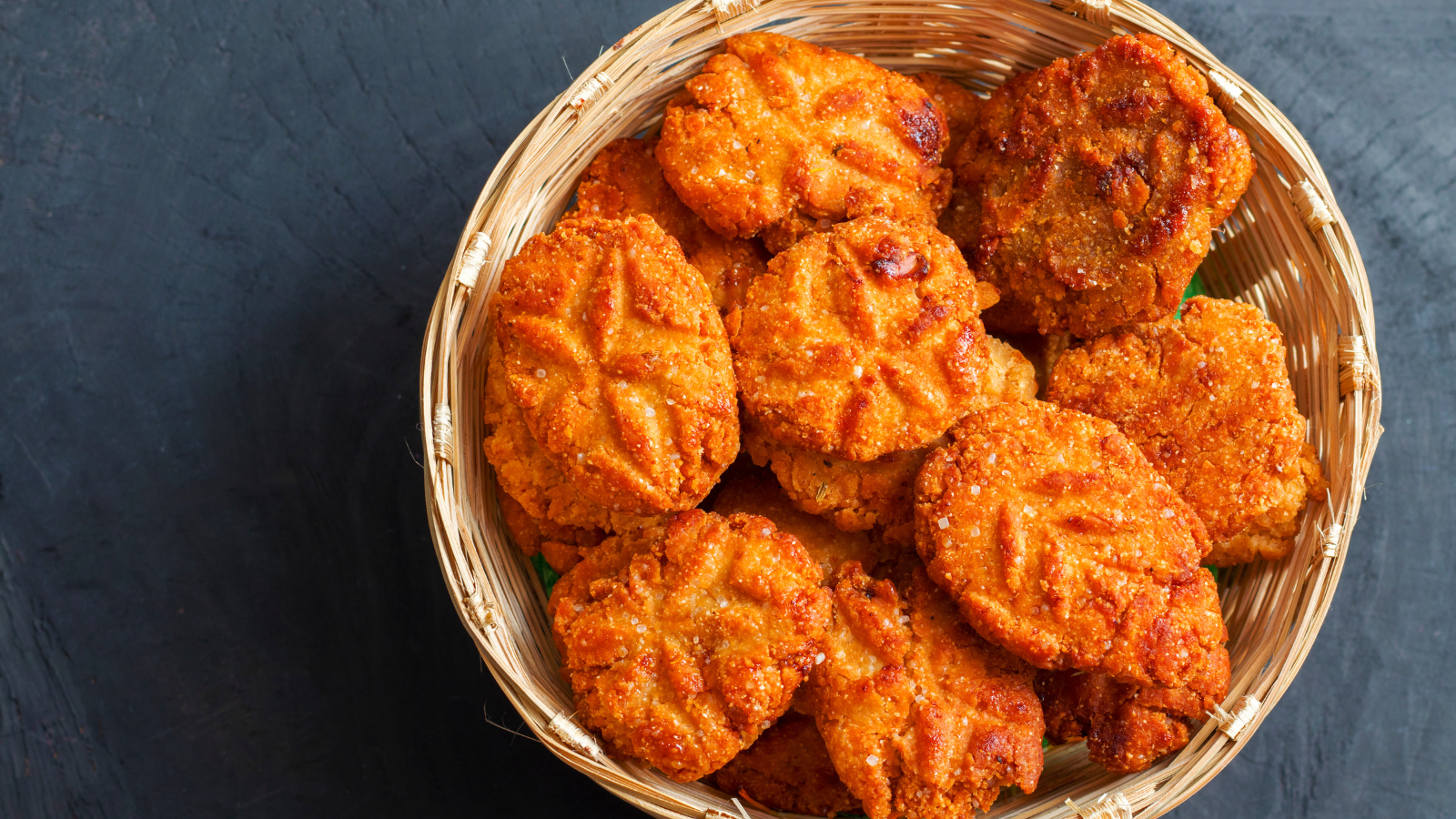
During Chhath Puja, thekua is one of the most cherished traditional offerings. Made from wheat flour, jaggery or sugar, and ghee, this delicacy is not only tasty but also has an interesting nutritional profile. Many believe that eating thekua provides instant energy and helps overcome weakness after long fasting periods. But is that really true? Let’s find out.
How does the carbohydrate in thekua provide energy?
Thekua is made using wheat flour, which contains a good amount of carbohydrates. When we eat thekua, the starch in it breaks down into glucose during digestion. This glucose travels through the blood to the body’s cells, where it is used to produce energy. According to the National Center for Biotechnology Information (NCBI), the body needs energy for daily activities, walking, thinking, and keeping muscles active. Carbohydrates play a key role in meeting this need.
The body can also store excess glucose as glycogen in the liver and muscles, to be used when needed. However, the energy from thekua should not be considered long-lasting. It also contains jaggery or sugar, which can increase its sugar and total carbohydrate content.
What nutrition do jaggery and wheat flour provide?
The two main ingredients in thekua—wheat flour and jaggery—provide the body with nutrients. Wheat flour can offer carbohydrates, protein, some fiber, and vitamins like B. According to the Harvard T.H. Chan School of Public Health, if thekua is made from whole wheat flour or other whole grains like ragi or bajra, it may have more fiber than refined flour.
According to NCBI, jaggery mainly contains sugar. It may also have small amounts of minerals like iron, potassium, and calcium. However, the amount of these minerals in jaggery is not high enough to consider it a major source of nutrition.
How useful are the calories from ghee in thekua for the body?
According to NCBI, ghee is used to make thekua tasty and crispy. Ghee is a source of fat, and fat provides about 9 calories per gram, while carbohydrates and proteins provide about 4 calories per gram. Therefore, thekua made with ghee can have a higher calorie content. Fat in the body is not limited to providing energy; it helps absorb certain vitamins, is part of cell structure, and provides energy storage. So fat is also necessary in the diet.
But this does not mean that eating more ghee-laden thekua is more beneficial. Consuming too many calories can increase the risk of weight gain. Especially those with weight, cholesterol, or heart health issues should pay attention to its quantity.
Can eating jaggery increase hemoglobin in the body?
According to NCBI, jaggery is often called a blood-building food. This is because it contains some amount of iron. Iron is an essential mineral for making hemoglobin in the body. Hemoglobin is a protein in red blood cells that carries oxygen from the lungs to different parts of the body. However, the claim that eating jaggery alone will increase hemoglobin is not correct.
The amount of iron in jaggery is limited, and to overcome iron deficiency in the body, sufficient amounts are needed. Therefore, if hemoglobin is low, instead of just eating jaggery or thekua, it is important to consult a doctor.
In summary, the carbohydrates and fats in thekua provide energy, wheat flour offers fiber and nutrients, and jaggery can provide small amounts of iron. The ghee used in thekua adds calories, but excess consumption increases total calorie intake. Therefore, it is better to eat thekua in limited quantities as a traditional offering and occasional sweet. People with diabetes should be especially careful as the jaggery or sugar in thekua can raise blood sugar. Similarly, those with kidney, heart, or digestive issues should follow their doctor’s dietary advice.
Key points
- Thekua provides energy mainly from carbohydrates and fats.
- Wheat flour contributes protein, fiber, and B vitamins; jaggery adds small amounts of iron, potassium, and calcium.
- Ghee increases calorie content; excess intake may lead to weight gain.
- Jaggery alone cannot treat low hemoglobin; medical advice is needed.
- People with diabetes or other health conditions should consume thekua with caution.