

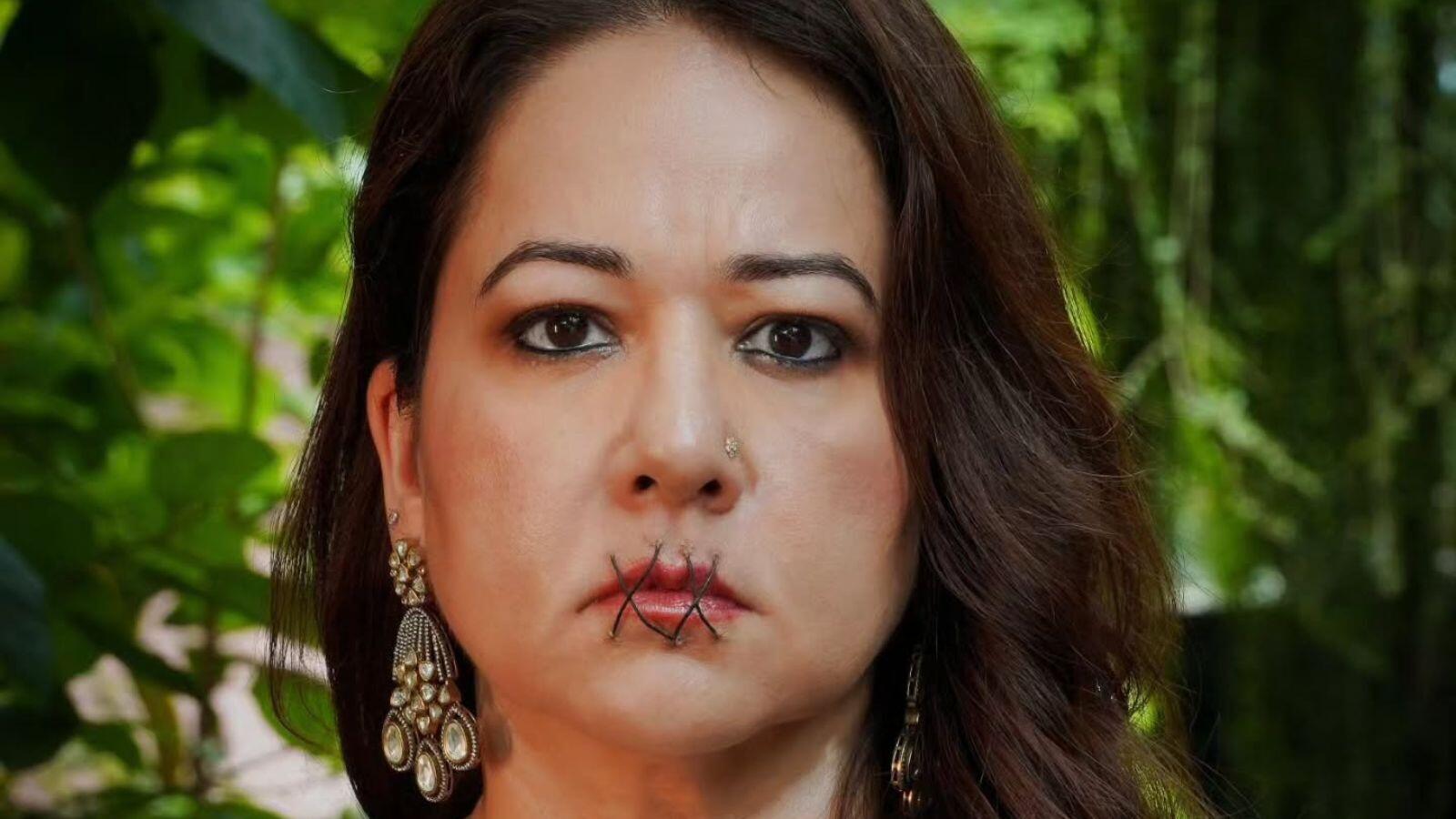
Ayesha Raza Mishra says breaking free from repeated mother roles depends on directors trusting actors with different characters.
Actress Ayesha Raza Mishra, known for playing memorable mother roles in films like Veere Di Wedding, Tu Jhoothi Main Makkaar, Gunjan Saxena: The Kargil Girl and Sonu Ke Titu Ki Sweety, is currently in the news for her role as Amrita in the family film Mitthe Mein Kya Hai. Despite her talent, she has been repeatedly cast as a mother, and she says breaking this typecasting is not in actors’ hands.
Ayesha Raza on typecasting: ‘A director must trust you’
Raza believes that to break free from typecasting, a director must trust an actor enough to offer a different role. She explained that actors cannot change this on their own. She often cites Manoj Pahwa as an example, noting that he too was typecast in Punjabi and comedy uncle roles for a long time. The two actors frequently discuss this pattern, joking that she plays the Punjabi mother while he plays the Punjabi father.
Raza recalled how director Anubhav Sinha cast Pahwa in Mulk in a role that many producers warned would fail because audiences saw him only as a comedian. Sinha trusted Pahwa’s ability, and the decision proved successful. Raza said such a break requires a director with vision and faith in the actor. She emphasized that without that trust, actors remain stuck in the same kinds of parts.
Learning from her husband: ‘Never be ungrateful’
Despite the frustration of typecasting, Raza said she has learned from her husband, actor Kumud Mishra, never to be ungrateful. She pointed out that they are at least working, while many more talented actors are still waiting for a single opportunity. She believes one should perform each role to the best of one’s ability, enjoy it and try to bring something new to it.
Raza added that if fate is kind, different roles will come; if not, there is always the stage. She said they can vent their frustration on stage, but having work at all is a blessing. She noted that one cannot work well if one is bitter or sad, so gratitude matters even when the industry limits opportunities.
Family legacy of strong women
Raza is the granddaughter of legendary actresses Zohra Sehgal and Uzra Butt. Asked about the influence of these strong women, she said it was profound. Both her grandmother and her maternal grandmother were working women. Her paternal grandmother was the world’s first female newsreader for BBC Urdu Service, while her maternal grandmother, Hazra Begum, was a freedom fighter and a member of the Progressive Writers’ Association.
Raza grew up seeing progressive writers like Krishan Chander and Kaifi Azmi visit her home. Her grandmother’s two sisters, Zohra Sehgal and Uzra Butt, came from families that observed purdah. Raza said these women left conservative homes and declared they wanted to dance, act and do theatre. Zohra even told her father she wanted to marry a Hindu man eight years younger than her, which was a big step in 1930.
Raza’s mother followed her aunts into theatre and acting, which meant all paths were already open for Raza. She feels she has not achieved as much because those women laid out everything for her, so her challenge is to find new challenges and explore herself. She considers their legacy very important.