

Mumbai, Maharashtra
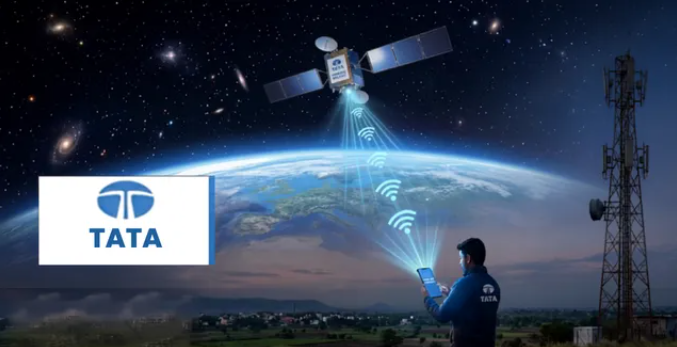
Tata Group’s satellite communications company Nelco Limited has taken a major step toward the future of connectivity. The company has announced a $20 million investment, approximately ₹167 crore, in US-based Lunar Holdco Inc. The strategic investment is aimed at promoting Direct-to-Device (D2D) and Internet of Things (IoT) connectivity in India and South Asia.
Nelco’s market capitalization is reportedly around ₹2,464 crore, making it one of the smallest listed companies within the Tata Group by market value. The company is a subsidiary of Tata Power and operates in the satellite communications sector.
Investment in US-Based Company
According to Nelco, the $20 million investment will be made through Compulsorily Convertible Debentures (CCDs). The investment is expected to generate a compounded annual return of 7%. However, despite the investment, Nelco will not gain control of Lunar Holdco.
Lunar Holdco is also associated with the name Alviero Mobile. The partnership between the companies is focused on developing technology that can allow mobile phones and other devices to connect directly to satellite networks.
How Will Phones Work Without Towers?
Direct-to-Device technology could reduce a mobile phone’s dependence on conventional cellular towers. Instead, compatible devices can communicate directly with satellites.
The technology could be particularly useful in areas where mobile towers or fiber networks have limited coverage. In remote regions, satellite-based connectivity could expand access to communication services and could also prove valuable during emergencies and natural disasters.
However, this does not mean that mobile towers will completely disappear in India. D2D technology is more likely to complement existing mobile networks rather than replace them entirely, helping expand connectivity into areas where traditional infrastructure is difficult or expensive to deploy.
Nelco’s investment is being viewed as an important part of the Tata Group’s broader strategy around the future of satellite-based connectivity in India. If the technology develops at scale, it could open new possibilities for mobile communication, IoT applications and connectivity in underserved regions.