

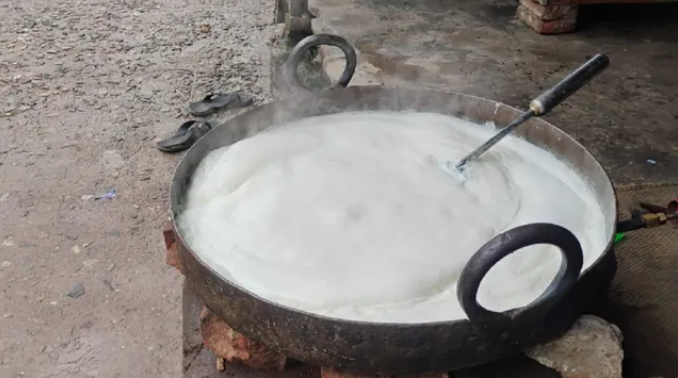
Kannauj, Uttar Pradesh
Amid rising demand for milk in Kannauj, concerns over adulteration have increased. The district reportedly consumes nearly twice as much milk as it produces on a daily basis. This significant gap has raised concerns that water and other substances may be mixed into milk before it is sold in the market.
According to available information, some milk vendors allegedly purchase buffalo milk and mix it with water and other chemicals before selling it to customers as cow milk. Concerns have particularly been raised over the alleged adulteration of buffalo milk and its sale under the label of cow milk.
The district reportedly has around 112,197 indigenous cows, 30,643 crossbred cows and 263,641 buffaloes. Despite this livestock population, daily milk production is estimated at around 800,000 litres, while consumption is reportedly more than 1.6 million litres. The large gap between production and consumption is being viewed as one possible factor contributing to concerns over milk adulteration.
Significant Difference in Prices
According to reports, buffalo milk is purchased from livestock owners at around ₹70 per litre, while cow milk is purchased at approximately ₹40 per litre. Water and other substances are allegedly added to increase the quantity of milk, which is then sold to consumers at a higher price.
There are also allegations that some people add substances to buffalo milk to make its appearance and texture resemble cow milk, including substances that may increase froth. However, the presence of any specific chemical can only be confirmed through laboratory testing.
Serious Health Risks from Adulteration
Adding water to milk reduces its nutritional value. The use of non-food substances such as urea or other chemicals can be potentially hazardous to health. Consuming such substances may have adverse effects on the body.
Detecting adulterated milk simply by looking at it can be difficult. Regular inspections by food safety authorities and laboratory testing of milk samples are therefore essential.
Given the increasing demand for milk, stronger monitoring of production, sales and the supply chain is needed to prevent adulteration and protect consumers. Authorities should ensure that suspected cases are properly investigated and that any adulterated milk is identified through scientific testing before conclusions are drawn.