

By Rahul Chopra (Patiala)
A.S. Bhola
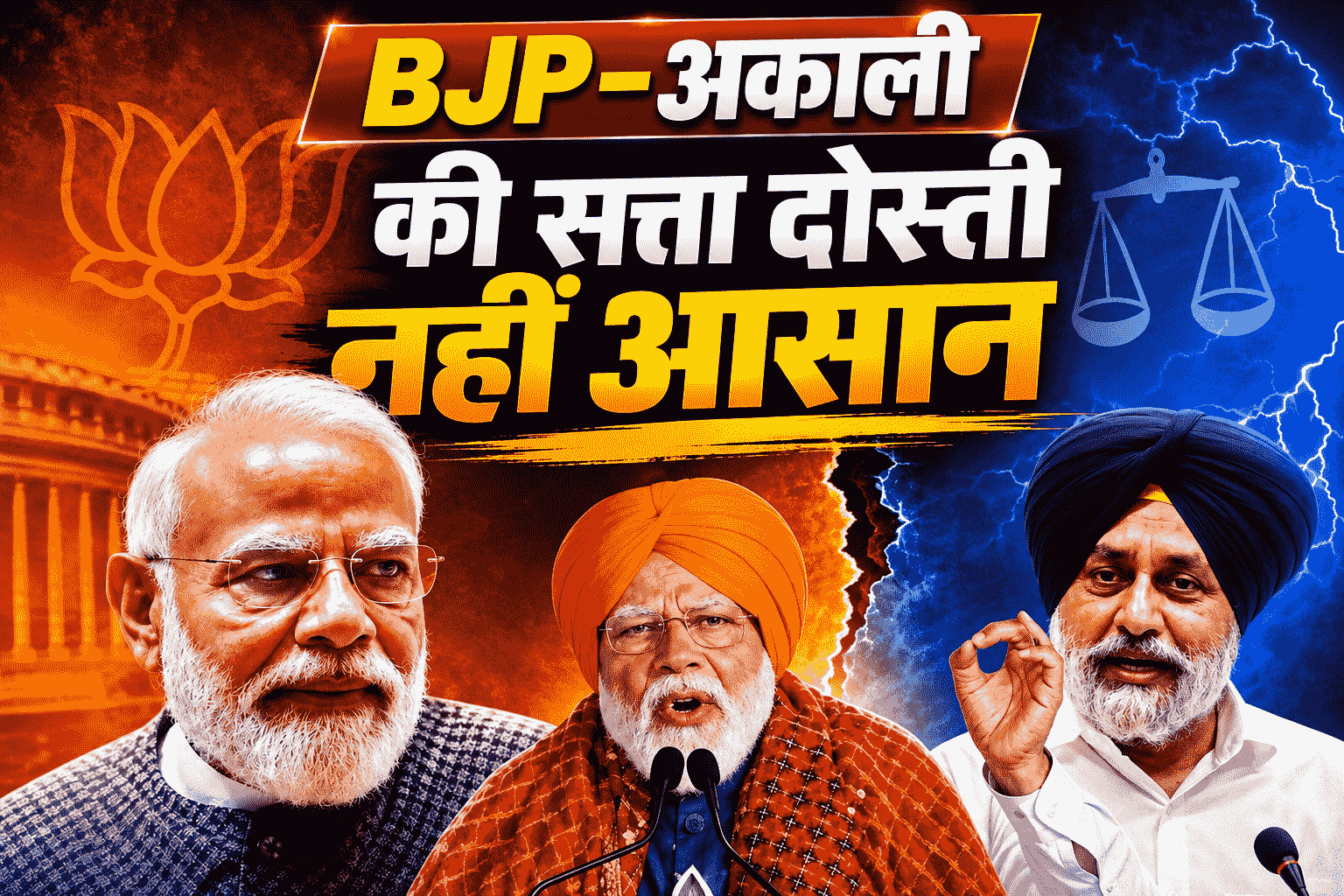
Speculation over a possible alliance between the Shiromani Akali Dal (SAD) and the Bharatiya Janata Party (BJP) has intensified in Punjab ahead of the 2027 Assembly elections. However, neither party has made any official announcement confirming a new alliance.
The speculation gained momentum after SAD president Sukhbir Singh Badal met Prime Minister Narendra Modi in Parliament on August 7, 2026. The meeting was followed by a meeting of SAD in-charges and senior leaders in Chandigarh the next day, where discussions reportedly focused on the party’s political strategy and possible electoral arrangements.
According to political sources, the discussions indicated that an alliance with the BJP could be moving towards a possible understanding. There has also been speculation that the Bahujan Samaj Party (BSP) could be offered a limited number of seats if a broader alliance takes shape.
Seat-Sharing Remains a Major Challenge
While alliance talks have generated considerable political interest, seat sharing remains one of the key points of disagreement.
The BJP is reportedly seeking a stronger position in several constituencies where it believes it has organisational and electoral strength. However, sections of the SAD leadership and grassroots workers are not believed to be fully comfortable with giving up some of these seats.
At the same time, the Punjab BJP’s state unit has maintained that the party is prepared to contest all 117 Assembly seats on its own. This position indicates that, at least publicly, there is still no confirmed alliance arrangement between the two parties.
Concerns Over SAD’s Traditional Vote Base
A possible alliance could also create challenges for the Shiromani Akali Dal’s traditional support base.
The 2020-21 farmers’ agitation and the controversy surrounding the farm laws left a section of Punjab’s farming community deeply critical of the BJP. Although political equations have changed since then, the extent to which this sentiment has weakened remains an important factor for the SAD.
There are also concerns within political circles about the response of young voters and minority communities. Any significant shift in the SAD’s traditional social coalition could potentially affect the party’s electoral prospects.
For the SAD, therefore, the potential benefit of an alliance with the BJP would have to be weighed against the possibility of losing support among sections of farmers, youth and minority voters.
What About the BSP?
The possible inclusion of the BSP adds another layer of uncertainty.
There has been speculation in political circles that the BSP could become part of a broader electoral arrangement in Punjab. However, the party’s current organisational and electoral strength in the state, along with the complexities of its political positioning, could make such an arrangement difficult.
The final structure of any alliance would therefore depend not only on seat-sharing but also on whether the three parties can establish a mutually acceptable political strategy.
2027 Punjab Elections: A Key Test
The possibility of an SAD-BJP alliance has already generated significant political discussion in Punjab. The meeting between Modi and Sukhbir Singh Badal, the subsequent SAD leadership meeting, reports of seat-sharing discussions and the Punjab BJP’s public position on contesting all 117 seats have created a mixed political picture.
For now, the alliance remains a matter of political speculation rather than an officially confirmed arrangement.
The biggest questions will be whether the two parties can reach an acceptable seat-sharing formula, how their grassroots workers respond, and whether voters accept a renewed electoral partnership.
With the 2027 Punjab Assembly elections approaching, the coming months could be crucial in determining whether the SAD and BJP return to the same political platform—or continue on separate electoral paths.