

Overview of the Report’s Core Claim
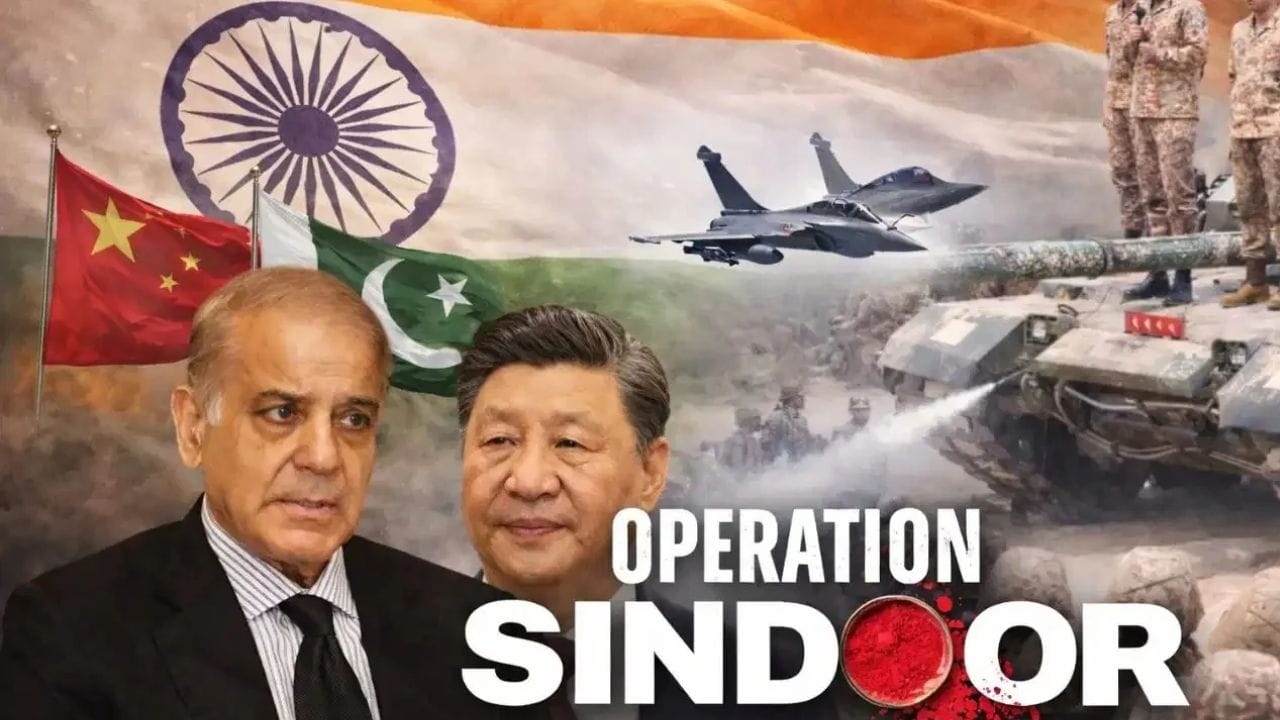
The America-China Economic and Security Review Commission has stated in its annual report to Congress that, in May 2025, Pakistan received direct military support from China during Operation Sindoor. The document frames this as part of a broader effort to curb India’s growing strategic advantage, highlighting Beijing’s use of border pressure and restrictions on critical industrial supply as tools to blunt New Delhi’s edge.
According to the commission, India stands out as one of the few powers outside the broader India-US alliance ecosystem capable of meaningfully challenging China over time. The panel emphasizes that Beijing understands this and is actively trying to suppress India’s gains across multiple domains.
China’s arm of support for Pakistan during Operation Sindoor
The panel notes that the May 2025 clash demonstrated how China could aid Pakistan without engaging in direct combat. It remarks that China’s growing military partnership with Pakistan has created a two-front security situation that is a serious concern for India, potentially complicating regional stability and defense calculations.
Earlier this year, Chinese engineer Zhang Heng told China’s state broadcaster that he was part of a team providing technical assistance to the Pakistan Air Force during the fighting, referring to the J-10CE fighter jets. Indian Lieutenant General Rahul Singh had previously stated that Beijing provided Pakistan with real-time inputs about Indian deployments.
Increased Pressure on the Border
The commission argues that China is persisting in expanding airfields, rail links and logistics infrastructure to facilitate faster mobilization along the Line of Actual Control. It also points to the growing presence of the Chinese navy in the Indian Ocean and associated intelligence activities as indicators of Beijing’s broader assertiveness in the region.
While India and China had reached a framework in 2024 to end the four-year stalemate in eastern Ladakh, the report notes that clashes continue at multiple locations on the Arunachal Pradesh frontier, underscoring the fragility of the disengagements and the potential for future escalations.
Restrictions on Industrial Inputs
The commission asserts that China halted exports of essential industrial inputs, recalled engineers, and blocked equipment shipments. These moves reportedly slowed India’s electronics manufacturing and affected battery technology exports and affordable pharmaceutical inputs, complicating the competitive landscape for new Indian producers.
In the assessment, the commission identifies India as an emerging alternative manufacturing base but stresses that Indian factories still rely on Chinese machinery and components. It urges Washington to strengthen intelligence sharing, defense technology collaboration, and supply-chain cooperation with New Delhi to counterbalance Beijing’s moves.
Further context and next steps
The report closes by noting that the implications of China’s actions extend beyond a single clash. It highlights the need for continued vigilance, more robust bilateral cooperation, and persistent modeling of potential contingency scenarios as regional dynamics evolve in the Indo-Pacific theater.