

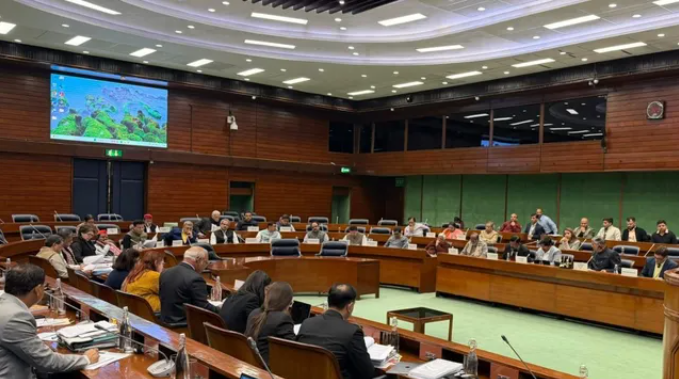
New Delhi, Delhi
The proposed meeting between the Joint Parliamentary Committee (JPC) formed to examine the ‘One Nation, One Election’ proposal and judges of the Supreme Court has been cancelled. The meeting was intended to discuss the constitutional and legal aspects of the proposal. However, the Supreme Court later concluded that holding such a meeting would not be appropriate.
According to JPC Chairman P.P. Chaudhary, the Supreme Court had initially agreed to the informal meeting. The committee had also received confirmation of the meeting through the Parliament Secretariat at the end of September. However, concerns were later raised that the proposed constitutional amendments could potentially become a subject of judicial review by the Supreme Court in the future. In such circumstances, it was considered inappropriate for judges to hold an administrative-level discussion with the parliamentary committee on the matter.
The proposal for the meeting was put forward by DMK MP P. Wilson. He expressed disappointment over the cancellation, describing it as a significant opportunity for discussion.
Meanwhile, JPC Chairman P.P. Chaudhary defended the decision to seek the views of judges. He said there have been precedents of interactions between parliamentary committees and judges on constitutional matters. According to him, the purpose of such discussions was to benefit from the judiciary’s expertise.
Following the cancellation of the meeting, the JPC is now consulting other experts and stakeholders on the issue.
As part of this process, economists also presented their views before the JPC in support of the ‘One Nation, One Election’ proposal. Chief Economic Adviser V. Anantha Nageswaran, S. Mahendra Dev and S. Gurumurthy, among others, supported the idea of holding elections simultaneously.
The economists argued that frequent elections affect the allocation of financial resources and tend to shift greater attention towards revenue expenditure rather than capital expenditure.

