

New Delhi, Delhi
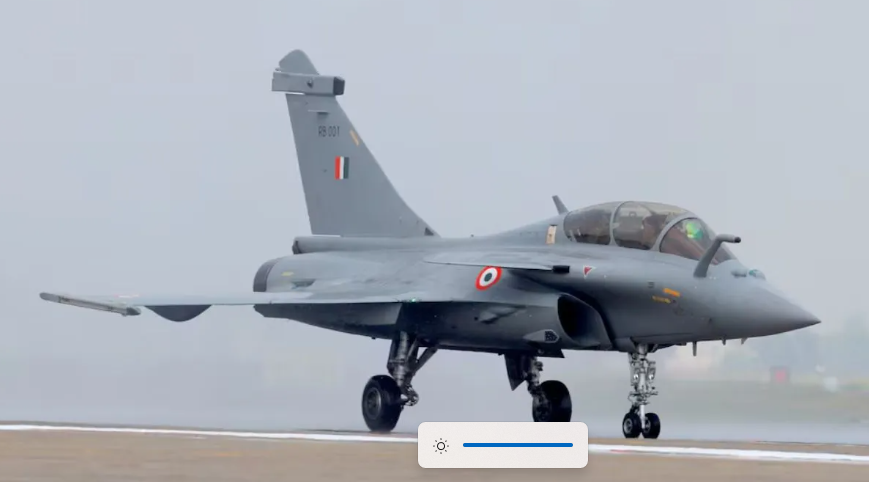
India is moving ahead with plans to acquire 114 Rafale fighter jets to strengthen the Indian Air Force’s combat fleet. France-based Dassault Aviation has submitted its technical and commercial proposal to India for the proposed deal. The mega contract is estimated to be worth around ₹3.25 lakh crore. The move is being viewed not only in the context of the Indian Air Force’s current operational requirements but also as a significant step toward strengthening India’s long-term air power capabilities, particularly in view of security challenges involving China and Pakistan.
In May, India sent a ‘Letter of Request’ (LoR) to France for the procurement of 114 Rafale aircraft. In response, Dassault Aviation submitted its proposal. A major component of the proposal is large-scale aircraft assembly and production in India, along with technology transfer arrangements.
Proposal to Assemble More Than 80 Percent of the Aircraft in India
Under the proposed deal, 18 Rafale aircraft would be delivered to India in fly-away condition. The remaining 96 aircraft are proposed to be assembled in India. This would mean that more than 80 percent of the aircraft could be assembled domestically.
Another important aspect of the proposed agreement is increasing the share of indigenous content. During the initial stages of production, the indigenous content is expected to be around 30 percent. As the production process matures and the domestic supply chain develops, the target is to increase this figure to more than 60 percent.
If implemented as proposed, the arrangement could help India not only acquire additional fighter aircraft but also strengthen its domestic aerospace and defence manufacturing ecosystem.
Why Does the Indian Air Force Need 114 Rafales?
The Indian Air Force has been facing a shortage of fighter squadrons for a long time. Older fighter aircraft are gradually being phased out of service, increasing pressure on the operational combat fleet.
At the same time, indigenous programmes such as the Tejas Mk-2 and the Advanced Medium Combat Aircraft (AMCA) are expected to play an important role in the future. However, it may take time for these aircraft to be fully developed and inducted into the force in sufficient numbers.
This is why the proposed 114 Rafales are not being viewed merely as an expansion of the existing fleet. They are expected to serve as an important bridge between the Indian Air Force’s current combat requirements and its future indigenous fighter fleet.
Why Is the Rafale’s Multirole Capability Important for India?
The Rafale is a twin-engine multirole fighter aircraft designed to perform a wide range of missions, including air superiority, interception, ground attacks, reconnaissance and maritime strike operations.
The aircraft is equipped with advanced radar and sensor systems, electronic warfare and self-protection systems, as well as network-centric combat capabilities. Its multirole design allows a single aircraft platform to be used for different operational requirements.
For India, this capability is particularly important because the country needs to address security requirements across its northern and western borders while also maintaining capabilities in the maritime domain.
India Already Has 36 Rafales
The Indian Air Force currently operates 36 Rafale aircraft. They are deployed with 17 Squadron at Ambala and 101 Squadron at Hasimara. These aircraft have strengthened the Indian Air Force’s modern multirole fighter capabilities.
However, considering India’s broader security requirements and the shortage of fighter squadrons, the existing fleet of 36 Rafales is not considered sufficient. The addition of 114 more aircraft would significantly expand the Rafale fleet and could substantially enhance the Air Force’s operational capabilities.
Final Approval Still Pending
The Defence Acquisition Council (DAC), chaired by Defence Minister Rajnath Singh, approved the Acceptance of Necessity (AoN) for the procurement in February. Following the submission of Dassault Aviation’s technical and commercial proposal, the procurement process is expected to move forward.
Several formal, technical and commercial stages still need to be completed before the final agreement can be signed. The procurement will eventually require final approval from the Cabinet Committee on Security (CCS), chaired by Prime Minister Narendra Modi.
The potential acquisition of 114 Rafale fighter jets is therefore not simply a matter of adding more combat aircraft to India’s fleet. It combines four major objectives: meeting the Indian Air Force’s immediate operational requirements, boosting domestic defence production, facilitating technology transfer and strengthening India’s long-term strategic preparedness.