

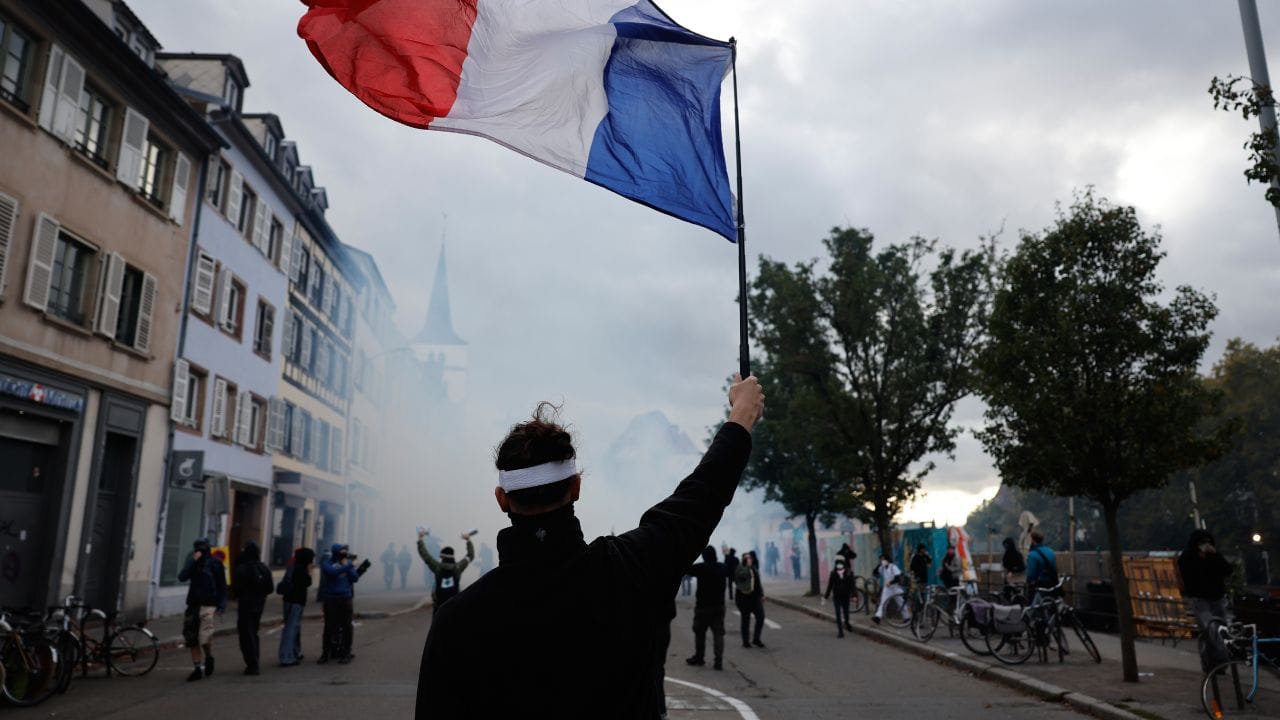
On Saturday, approximately 410,000 people took to the streets across France to protest rising inflation and cuts in school budgets. The demonstrations saw clashes between protestors and police, particularly intense in Paris, where around 110,000 people gathered. The protests come just a week after incidents of violence, vandalism, and looting in several French cities. These ongoing unrests are increasing pressure on President Emmanuel Macron’s government.
Mass Arrests and Police Response
The French Interior Minister, Laurent Nunez, stated that about 1,000 individuals were arrested during the protests. He identified some groups, dressed in black, as far-left extremists who engaged in violent confrontations with law enforcement. The police faced unusually high levels of aggression, prompting the deployment of around 70,000 security personnel nationwide to maintain order.
In Paris, police employed tear gas and water cannons to disperse crowds. Trade union banners and signs criticizing both the Macron administration and police were visible throughout the demonstrations. Despite the disruption, Nunez emphasized that citizens had the right to express their opinions peacefully, but some aimed to escalate violence.
Challenges Ahead for Macron’s Government
The protests pose a significant challenge to Macron’s government as the country approaches the presidential elections in May 2027. Authorities have instructed law enforcement to keep demonstrators away from key urban areas, shops, and commercial zones. To minimize violence, curfews were imposed temporarily in parts of Paris and other cities.
The AFP reported that Macron has directed officials to ban protests not associated with trade unions, labeling them illegal. Student organizations and labor unions have vowed to continue their demonstrations, demanding the government reverse its proposed budget decisions and increase funding for education and essential public services.
These sustained protests reflect deep public concern over the impact of inflation and austerity measures, especially on schools. The government’s response and its ability to manage the unrest will be crucial in the lead-up to the presidential election, with the social climate remaining tense across the country.
As France navigates these turbulent times, the effectiveness of security responses and political dialogue may shape the path ahead, while demonstrators insist on maintaining pressure until their demands are addressed.