

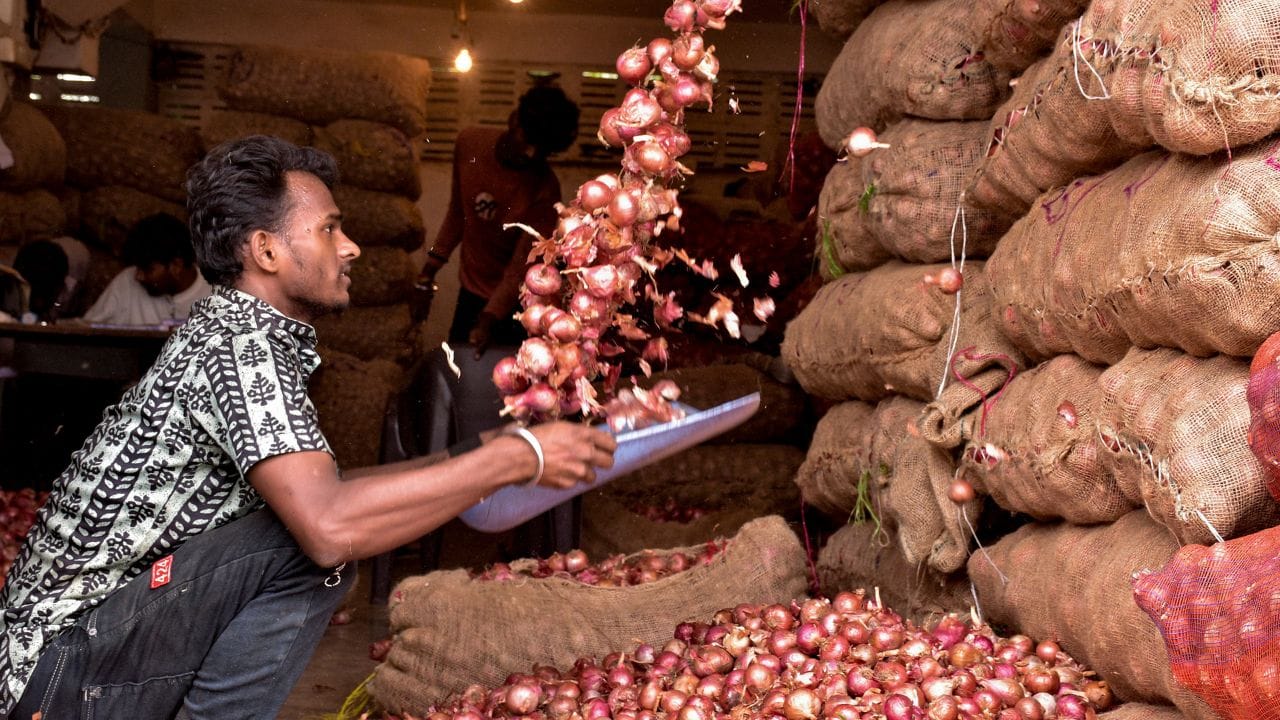
Despite a 108.09% inflation rate reported for onions, the situation is not simply due to poor harvests or reduced supply this time. Interestingly, onion cultivation area has actually increased, harvest issues appear minimal, and prices in Maharashtra’s markets have started to decline. Yet government data still shows onion inflation exceeding 108%. This raises the question: why do onions seem so expensive when the crop is healthy and market prices are dropping? To answer this, it is vital to understand the difference between inflation numbers, wholesale market prices, and retail prices paid by consumers.
Understanding the 108% Onion Inflation Rate
Firstly, it is important to clarify that a 108% inflation rate does not mean onion prices doubled within a single month. According to the Consumer Price Index (CPI) data for September 2026, onion’s annual inflation rate stood at 108.09%, comparing price indices from September 2025 to September 2026. This figure was 48.78% in August 2026.
For example, if a price rose from 20 to 41.62 rupees over a year, the increase would be roughly 108%. This is just an illustration, not the actual market price. Thus, understanding inflation requires comparing prices over the correct timeframe.
Why Are Onions So Expensive Despite a Good Crop?
Usually, onion price surges are linked to bad harvests, weather damage, or supply shortages. But this year’s production figures tell a different story. The estimated onion production for 2025-26 is 307.37 lakh tonnes, nearly equal to 307.67 lakh tonnes in 2024-25, a minor 0.10% dip. Meanwhile, cultivation area increased by 2.31%. These figures come from the Ministry of Agriculture’s second advance estimates.
This suggests that onion inflation cannot be explained by poor harvest alone. Instead, it’s crucial to consider when the harvested onions reach markets, in what quantity, and at what price.
From Field to Kitchen: Factors Affecting Onion Prices
Onion prices depend not only on production but also on storage, transportation, and market supply timing. Storing onions for long is challenging due to moisture, spoilage, sprouting, and weight loss, reducing saleable quantities. Seasonal supply plays a role since a single crop cannot meet the year-round demand. Wholesale market (mandi) prices can fall before retail prices adjust, causing a lag. Transportation costs from producing regions to major consumer cities also add to the final retail price.
Therefore, despite steady annual production, onion availability and prices can vary greatly at different times of the year.
The government has taken several steps to control price spikes. These include creating a buffer stock by purchasing 2 lakh tonnes of rabi onions starting May 15, 2026, to release as needed. Rail and truck services transported onions from Maharashtra to Delhi-NCR, including the ‘Kanda Express’. Buffer stock onions were sold at subsidized rates of 35 rupees per kilogram through agencies like NAFED and NCCF to ease consumer burden and boost supply.
By October 7, average market prices in Maharashtra showed a decline, and retail prices in many cities also dropped.
Why Is Onion Inflation Still High Despite Falling Market Prices?
Maharashtra’s average mandi price fell by about 14% between September 16 (4030 rupees per quintal) and October 3 (3475 rupees per quintal). However, inflation figures compare all of September 2026 to September 2025, while mandi prices capture a later period. Thus, onion prices may have been significantly higher during September compared to last year, even though market prices dropped afterward. Both can be accurate simultaneously.
Potato and tomato prices followed a different trend. Potato inflation was -11.50% and tomato inflation -8.62% in September 2026, meaning their prices fell compared to the previous year. This highlights that vegetable prices do not always move in the same direction; each crop’s production period, storage, supply, and demand vary.
Looking ahead, three factors will influence onion prices: arrival of kharif onions from states like Karnataka, Andhra Pradesh, and Rajasthan; continuation of falling mandi prices in Maharashtra potentially lowering retail rates; and government decisions regarding releasing buffer stocks. Weather and transportation conditions will also shape prices, so it’s uncertain if onion prices will drop sharply nationwide soon.
The 108% inflation statistic reveals a significant year-on-year increase but does not tell the full story. Production remained stable, cultivation area increased, and government action helped supply. Still, comparing annual price indices to more recent market prices explains the gap between rising inflation rates and falling retail costs. Ultimately, consumers will watch if new harvest arrivals and wholesale price trends translate into affordable onions in stores.

