

New Delhi, Delhi
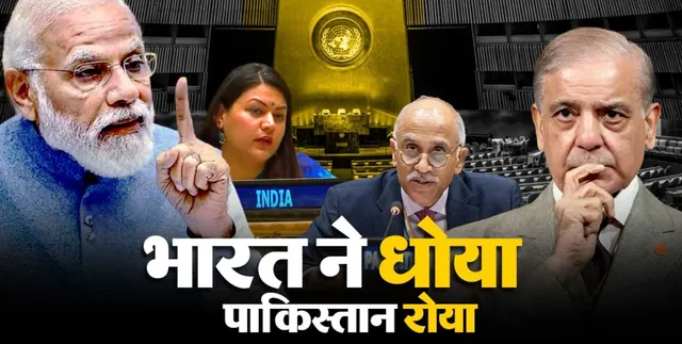
India and Pakistan have been engaged in a long-running and often bitter diplomatic exchange at the United Nations over Kashmir and terrorism. Pakistan has repeatedly raised the Kashmir issue at the UN, while India has responded by highlighting cross-border terrorism and the activities of terrorist organisations based in Pakistan.
The confrontation has continued in recent years as well. After Pakistan raised the Kashmir issue from the platform of the United Nations General Assembly, India has often exercised its right to respond by highlighting terrorism and the presence of terrorist organisations operating from Pakistan.
The Kashmir issue first reached the United Nations in 1948. India’s position has consistently been that Jammu and Kashmir is an integral part of India and that Pakistan is in illegal occupation of territory belonging to India. Pakistan, on the other hand, has referred to UN resolutions and continued to call for the right of self-determination for the people of Kashmir.
The two countries have also engaged in sharp exchanges at the United Nations Security Council on several occasions. India has, at various times, referred to the 26/11 Mumbai attacks and cross-border terrorism while calling on Pakistan to take action against terrorist organisations.
India has alleged that Pakistani territory has been used for terrorist activities against India. Pakistan has rejected these allegations and, in turn, accused India of human rights violations in Kashmir.
India frequently uses its Right to Reply at UN forums to respond to Pakistan’s allegations. Pakistan, meanwhile, continues to seek international attention for the Kashmir issue.
Thus, the United Nations has not merely been a platform for diplomatic exchanges between India and Pakistan. It has also remained an important forum where both countries present their respective international narratives on Kashmir, terrorism and bilateral relations.

