

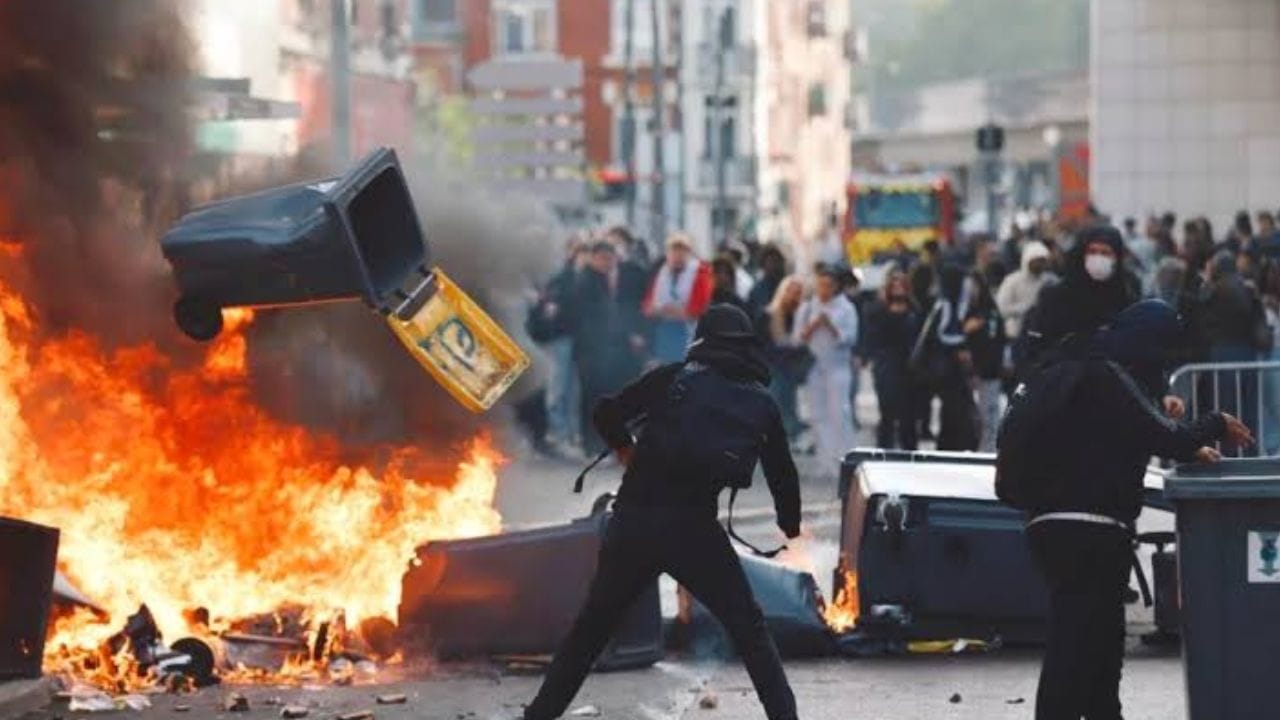
Across Europe, widespread unrest has erupted as citizens in several countries take to the streets, expressing deep frustration over inflation, corruption, and unemployment. Governments are growing increasingly concerned about reports of rebellion and fears of potential coups. From Italy and France to Albania and Portugal, public anger has spilled into violent protests met with water cannons and strong police measures.
Escalating Violence in Italy and France
Italy has been hard hit, with Milan witnessing days of looting at upscale malls and stores. Videos continue to surface showing demonstrators openly ransacking shops while police struggle to contain the chaos. Naples now faces similar unrest, where not only luxury outlets but small businesses and markets are being looted, with people grabbing whatever they can carry and fleeing.
The situation has become so tense that some shopkeepers have resorted to standing outside their stores armed with guns to defend against the looters. Demonstrators control entire streets, making law enforcement efforts challenging.
Economic grievances fuel much of the unrest. In Italy’s Gela, farmers are protesting with tractors over soaring fuel prices, which have more than doubled. Public dissatisfaction with inadequate services also runs high. The country’s open support for Ukraine in the ongoing Russia-Ukraine conflict has stirred further discontent. The right-wing National Future Party urges renewed ties with Russia, criticizing the government’s military and financial aid to Ukraine. Many Italians feel their domestic problems are being overlooked in favor of foreign conflicts.
Government Response and Broader Unrest
Prime Minister Giorgia Meloni convened an emergency meeting to address the demonstrations, noting that thousands were mobilized through social media platforms. Authorities have detained nearly 330 individuals, half of whom are reportedly of foreign origin. New legislation calls for strict penalties against groups of five or more rioters, including prison sentences of up to five years and fines up to 20,000 euros. Juvenile offenders’ parents will be held liable for damages. Additional military forces are being deployed in Milan to restore order.
Meanwhile, France continues to see masked demonstrators engaging in looting and vandalism, sparking public debate about how many rioters are native citizens. In cities like Rennes, violent clashed with police persist, street fires burn, and barricades are set ablaze. Protesters targeted luxury jewelry stores, smashing glass displays and stealing valuable items. The movement, which began in schools due to concerns about rising costs and poor education systems, has spread nationwide. Former U.S. President Donald Trump controversially linked the unrest to France’s handling of immigration, warning of demographic changes in Paris.
Albania is also engulfed in protest. Demonstrators have set fire to government buildings including the Supreme Court and the Ministry of Education. Millions voice their opposition to Prime Minister Edi Rama, who has refused to resign despite demands. The protests intersect internationally with Jared Kushner, Donald Trump’s son-in-law, involved in a luxury resort project on an island that locals say threatens protected natural areas. The movement has been dubbed the “Flamingo Revolution,” named after the flamingo birds inhabiting the region, symbolizing the struggle against perceived economic exploitation.
President Emmanuel Macron of France has implemented curfews and banned large gatherings to stem the violence. France’s government promises to maintain strict enforcement to prevent further unrest. Italian Prime Minister Meloni confirmed the enactment of new laws targeting violent protesters, with particular focus on those hiding their identity during riots and causing harm.
Albanian Prime Minister Rama declared openness to unconditional dialogue with peaceful protesters, though he made clear that those involved in violence are unwelcome. As European nations grapple with ongoing demonstrations, the cause and consequences of this surge of anger continue to unfold across the continent.