

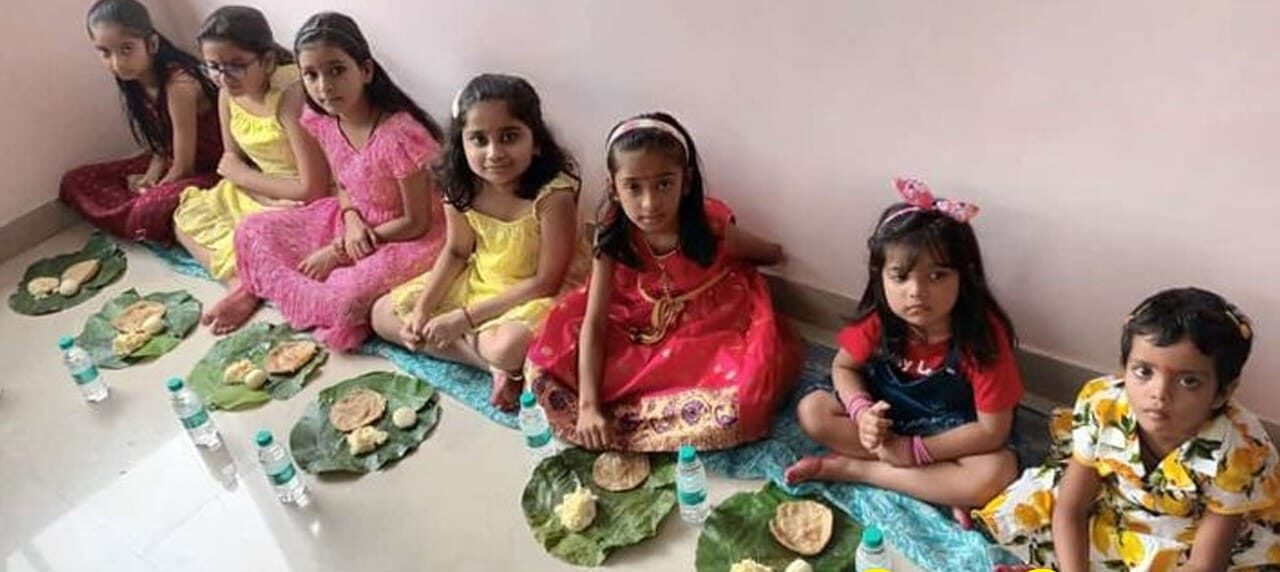
Sharadiya Navratri started on October 11, marking nine days of worship dedicated to Goddess Durga’s nine forms. Among these days, Durga Ashtami is particularly significant for performing Kanya Pujan, a ritual honoring young girls symbolizing the goddess herself. Devotees believe that offering respect and hospitality to these girls brings the blessings of Mata Rani. Fasting believers warmly invite girls to their homes to seek divine grace.
Inviting and Honoring Young Girls
Before beginning the Kanya Pujan on Durga Ashtami, devotees prepare by inviting nine young girls and a small boy to their homes. The nine girls are revered as the nine Shakti forms of Goddess Durga, while the boy represents Batuk Bhairav or Langur. On arrival, the girls are respectfully seated on clean seats, and their feet are washed with clean water. Subsequently, they are dried with fresh cloths, and a tilak made of kumkum and rice grains is applied on their foreheads. Protective threads, known as mauli, are tied to their wrists. This respectful welcome is essential for invoking positive energy and auspiciousness for the worship.
Performing these initial steps with devotion sets a sacred tone for the entire ritual and is considered crucial for its success.
Offering Prasad and Receiving Blessings
After the initial rites, the girls are served a meal that traditionally includes halwa, black chickpeas, puri, and vegetable curry — all prepared as sattvic or pure offerings pleasing to the goddess. Once the meal is completed, the devotees touch the girls’ feet in humility to receive their blessings. As a sign of gratitude and devotion, it is customary to give the girls a gift or dakshina, based on one’s capability. This heartfelt practice is believed to bring peace, prosperity, and happiness into the household.
Following the prescribed process diligently ensures the family remains blessed by Mata Rani and experiences relief from hardships over time.
Maintaining Energy During the Fast
Fasting throughout the nine days of Navratri requires proper diet management to avoid fatigue and weakness. Devotees are advised to consume nutritious and easily digestible foods during their fruit-based meals to stay energetic. It is important to limit the use of rock salt and balance the intake of ingredients like potatoes, buckwheat, and sago. Adequate hydration is essential to prevent dehydration, so drinking plenty of fluids throughout the day is recommended.
Eating sattvic food not only calms the mind and enhances focus during prayers but also allows devotees to complete their fasts without physical exhaustion.
Adhering to these traditions with sincerity ensures spiritual benefits and strengthens the devotee’s connection with the divine during Navratri.

