

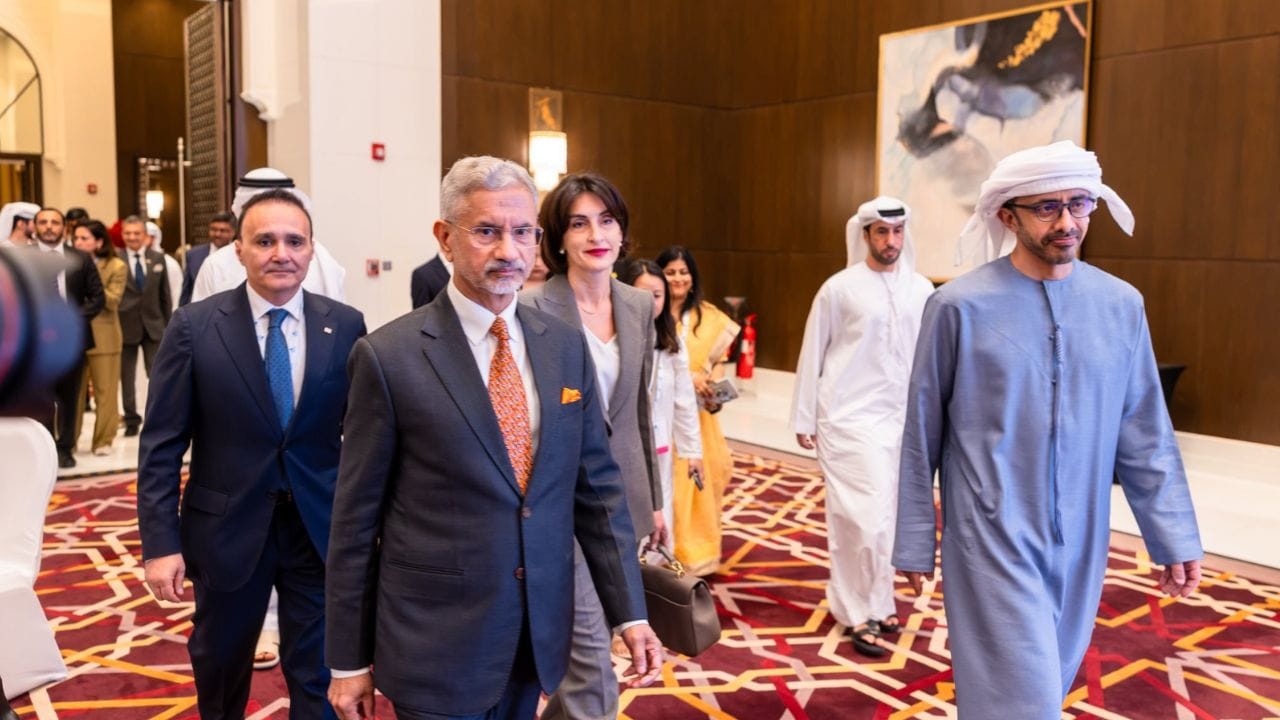
Indian External Affairs Minister S. Jaishankar met with UAE’s Deputy Prime Minister and Foreign Minister Abdullah bin Zayed Al Nahyan on Thursday in Abu Dhabi. The two leaders engaged in a cordial and meaningful discussion, reflecting the strong partnership between their countries. They exchanged views on bilateral cooperation and pressing global issues in a rapidly changing world.
Strengthening Strategic Partnerships
In a statement shared on X, Jaishankar described the meeting as an opportunity to reinforce the “broad strategic partnership” between India and the UAE. The ministers emphasized the importance of understanding the swift changes occurring in the global order, which are marked by long-term trends and sudden shocks. According to Jaishankar, countries respond individually to these shifts, highlighting the need to explore new partnerships and alternatives to adapt effectively.
Jaishankar stressed that traditional methods are no longer sufficient in addressing these challenges. He highlighted the importance of developing enhanced strategic understanding and called for urgent reforms in multilateralism. Strengthening minilateralism — cooperation among limited groups of countries — was cited as a crucial way to advance these efforts.
Urgent Need for Reform in Multilateral Institutions
Expanding on the topic of international cooperation, Jaishankar underscored the significance of immediate reforms in multilateral bodies to make them more effective. He emphasized the role of smaller groupings, or minilateral arrangements, in enhancing multilateralism. Drawing on the India-UAE partnership as a case study, he noted that the last decade exemplifies how both nations have adapted to shifts in the global landscape.
The Indian minister remarked that the past ten years of India-UAE relations demonstrate how their alliance has successfully navigated a transforming international environment. This cooperation serves as a model for adjusting strategies in response to global developments.
In his meeting with Abdullah bin Zayed, Jaishankar affirmed that the world is evolving rapidly. Therefore, improving the international order and fostering enhanced collaboration among major countries is essential to address emerging challenges effectively.
Both leaders reaffirmed their commitment to deepening bilateral ties and collaborating on global issues. Their dialogue underscored shared interests in fostering peace, stability, and prosperity amid ongoing geopolitical shifts.
The discussions also highlighted the need for innovative approaches beyond traditional diplomacy. Such initiatives aim to build resilient partnerships capable of addressing economic, security, and environmental challenges that characterize today’s world.
Overall, the meeting between Jaishankar and Abdullah bin Zayed reinforced the enduring partnership between India and the UAE. It also demonstrated their joint intent to pursue collaborative solutions in the face of a rapidly changing global order.