
In a significant legal development, the Supreme Court is set to deliver its verdict on the petitions challenging the powers assumed by the Election Commission of India (ECI) regarding citizenship determination. The petitions have accused the ECI of arbitrarily overstepping its jurisdiction by attempting to “determine citizenship” in ways that override explicit limitations enshrined in parliamentary laws, official rules, and the commission’s own procedural manual.

The core of the petitions lies in the allegation that the ECI acted beyond its mandate without furnishing any substantial justification. Petitioners argue that the Election Commission’s actions undermine the legal framework established by Parliament, which distinctly sets boundaries and processes for citizenship verification and status confirmation. By bypassing these established procedures, the ECI is said to have disrupted the constitutional balance of power and violated citizens’ rights.
Experts observing the case note that this matter is especially critical given its implications on electoral integrity and the democratic process. The Election Commission is typically endowed with the responsibility to oversee elections and ensure their fairness, but the question of whether it can independently define or verify citizenship status raises complex legal and constitutional issues.
Several legal analysts emphasize that a ruling on this matter will clarify the interpretation of parliamentary laws related to citizenship and election oversight. It will also guide the Election Commission’s future actions concerning voter rolls and citizenship recognition, ensuring adherence to rule of law principles.
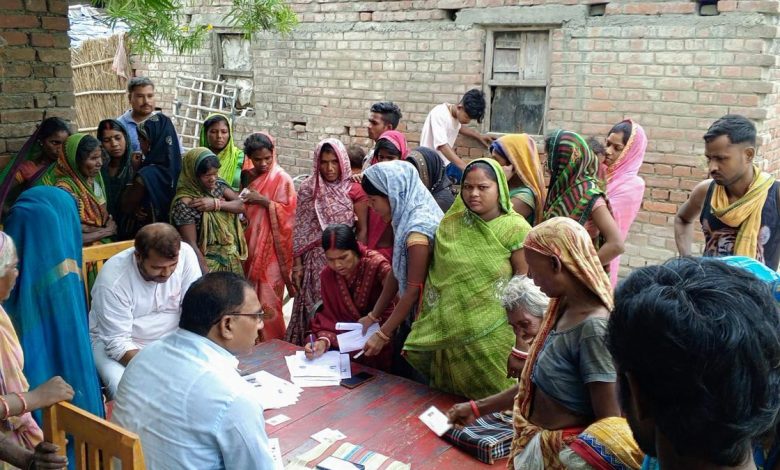
The case has attracted widespread attention, especially in states like Bihar, where questions about citizenship and electoral rolls have been politically and socially sensitive. Citizens, political parties, and civil society await the Supreme Court’s judgment, which is expected to set a precedent on the scope of authority exercised by constitutional bodies.
As the court’s verdict approaches, stakeholders hope for a decision that reinforces constitutional safeguards while maintaining the Election Commission’s role as an impartial arbiter of electoral processes. The judgment will likely address not only the legal technicalities but also the broader concerns related to democracy, citizenship, and governance.
The Supreme Court’s ruling tomorrow is anticipated to be a landmark in India’s electoral jurisprudence, potentially impacting policy and administrative approaches to citizenship verification and election management nationwide.