

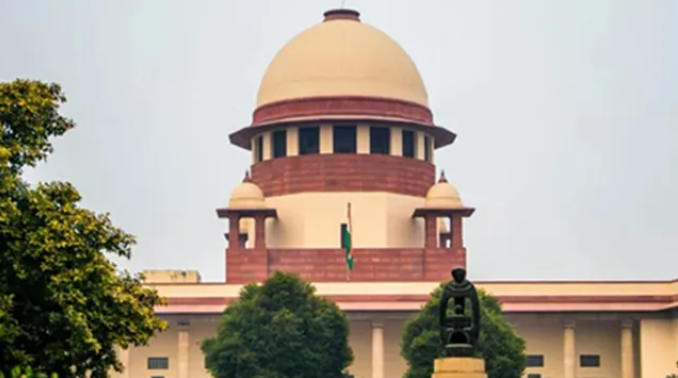
New Delhi, Delhi
The important legal battle before the Supreme Court over the method of carrying out the death penalty in India has reached a crucial stage. A bench comprising Justice Vikram Nath and Justice Sandeep Mehta reserved its judgment on January 22, 2026, on a petition seeking the adoption of less painful and more humane methods instead of hanging. According to available credible reports, the Supreme Court has not dismissed the petition.
The case concerns a Public Interest Litigation (PIL) filed by advocate Rishi Malhotra in 2017. The petition challenges the existing system of executing the death penalty through hanging on constitutional grounds. The petitioner argues that the method of execution should minimise unnecessary physical suffering while also respecting the dignity of the individual.
Demand for Alternatives, Including Lethal Injection
The petition seeks consideration of alternative methods of execution, including lethal injection, instead of hanging. The petitioner argued that in view of developments in medical science and changes in the way capital punishment is carried out in several parts of the world, India should also reconsider its existing system.
The petition invokes Article 21 of the Constitution, arguing that the right to life and personal liberty also encompasses the right to dignity. The petitioner has therefore urged the court to examine the procedure of hanging against this constitutional standard.
What Did the Central Government Say?
During the hearing, the Central Government said that the issue was being considered at the highest level. On January 22, 2026, Attorney General R. Venkataramani informed the Supreme Court that the government was examining the matter. After hearing arguments from both sides, the court reserved its order.
The matter had also been heard in October 2025. At that time, the Centre raised questions about the practical feasibility of adopting lethal injection as an alternative method of execution. The petitioner, meanwhile, had sought at least an option for a death-row convict to choose between hanging and lethal injection.
What Does the Law Currently Provide?
Indian law provides for hanging as the method of carrying out a death sentence. The Bharatiya Nagarik Suraksha Sanhita, 2023 (BNSS) also retains the provision for execution by hanging.
The Supreme Court has previously examined the constitutional validity of executing the death penalty by hanging. However, the separate legal challenge concerning alternative and potentially less painful methods has remained before the court for a considerable period.
For now, the Supreme Court’s final decision is awaited. Therefore, the claim that the court has rejected the petition seeking alternative methods of execution is not supported by the available record. On January 22, 2026, the bench had only reserved its judgment.