

Strasbourg, Europe: Reading a newspaper with morning tea has long been a familiar part of everyday life. From politics and world affairs to sports, business and entertainment, newspapers have played an important role in keeping people informed.
But centuries ago, news travelled very differently. Before printed newspapers became common, important information was often shared through handwritten news sheets, letters and newsletters.
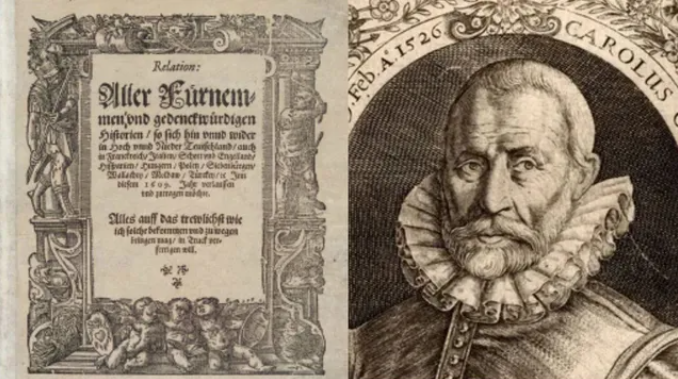
The history of the modern newspaper is closely connected with 17th-century Europe. In 1605, Johann Carolus, a printer and publisher in Strasbourg, began publishing a periodical that is widely regarded as one of the world’s earliest printed newspapers.
The publication was called “Relation aller Fürnemmen und gedenckwürdigen Historien,” a title that can be broadly understood as an account of important and noteworthy news and events.
Before Newspapers, News Was Written by Hand
Before printing technology became widely established, news was often copied manually and circulated among merchants, government officials and other interested readers.
Producing several copies by hand was slow and labour-intensive. As a result, news could take considerable time to reach people, and the number of readers was naturally limited.
The development of Carolus’ printed publication marked an important change.
With printing technology, the same information could be reproduced in multiple copies. This made it possible to distribute news more quickly and efficiently to a wider audience.
What Was the First Newspaper Like?
The publication produced by Johann Carolus was very different from the newspapers we know today.
It did not have:
- Modern newspaper layouts
- Photographs and illustrations as we see today
- Separate sports, business and entertainment sections
- 24-hour breaking-news updates
- Digital editions or online news portals
Nevertheless, the regular production and distribution of printed news represented an important milestone in the development of journalism.
A Major Turning Point in Journalism
As printing technology improved, printed news publications gradually became more common throughout Europe and eventually spread to other parts of the world.
Newspapers eventually became influential institutions in politics, commerce, public debate and social life.
They also changed how people learned about events happening outside their own communities.
Information that once travelled slowly through handwritten copies could now be printed, reproduced and distributed to much larger groups of readers.
From Printed Newspapers to Digital News
The news industry has transformed dramatically over the centuries.
Today, people can receive breaking news through:
- Smartphones
- News websites
- Television
- Social media
- Mobile applications
- Digital newsletters
A major event can now reach millions of people around the world within seconds. Readers no longer have to wait until the next morning to find out what happened.
Yet the foundation of this modern information system can be traced back to the early development of printed news publications.
The work associated with Johann Carolus and early printed newspapers helped establish an important concept: news could be regularly produced, printed, reproduced and distributed to readers.
More Than 400 Years of Newspaper History
More than four centuries later, the transition from handwritten news to printed newspapers remains an important chapter in the history of journalism.
It marked the beginning of a transformation that changed how societies received and shared information.
From handwritten newsletters to printed newspapers, and eventually from newspapers to websites and social media, the way people consume news has continued to evolve.
The technology may have changed, but the fundamental purpose remains the same: to inform people about the world around them.