

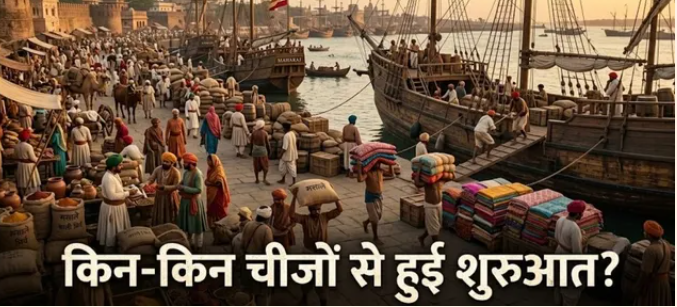
Surat, Gujarat
India’s trading history with the rest of the world dates back several centuries. Since ancient times, Indian spices, textiles, silk, cotton and indigo have reached foreign markets through maritime trade routes. Demand for Indian goods was so strong that merchants from various parts of Europe and Asia travelled to India for trade. However, during that period, international commerce was largely conducted through individual merchants and trading groups.
When it comes to organised and large-scale overseas trade, the East India Company is one of the most prominent names in history. The company was established in England in 1600 and subsequently began commercial activities in India. During the 17th century, it established trading centres at several important Indian ports, with Surat emerging as one of its key bases.
Strong Demand for Indian Spices and Textiles
The East India Company purchased spices, cotton and silk textiles, indigo and other valuable commodities from the Indian market and transported them overseas by sea. Indian textiles and spices were particularly popular in European markets at the time. Indian fabrics were renowned for their quality, intricate craftsmanship and variety.
Surat was an important centre of maritime commerce during this period. Goods were shipped from the port to markets across West Asia and Europe. The trade generated substantial profits for the company and helped strengthen its commercial presence in India.
From Trading Company to Colonial Power
The East India Company began as a commercial organisation, but its activities eventually expanded far beyond trade. Over time, the company began increasing its political and military influence in India and gradually established control over large parts of the country.
This is why the East India Company occupies an important place in the history of India’s exports and maritime trade, while also being deeply connected with the country’s colonial history. Foreign trade from India existed long before the company arrived, but the East India Company expanded overseas commerce through a large, organised commercial network and helped Indian commodities reach European markets on a much larger scale.