
US Attacks Iran for Seventh Consecutive Night as Tehran Warns: ‘No Border Will Remain Safe if Strikes Continue’
Tensions in the Middle East escalate as the US carries out a seventh consecutive night of strikes on Iran, while Tehran retaliates with renewed attacks across Gulf states.
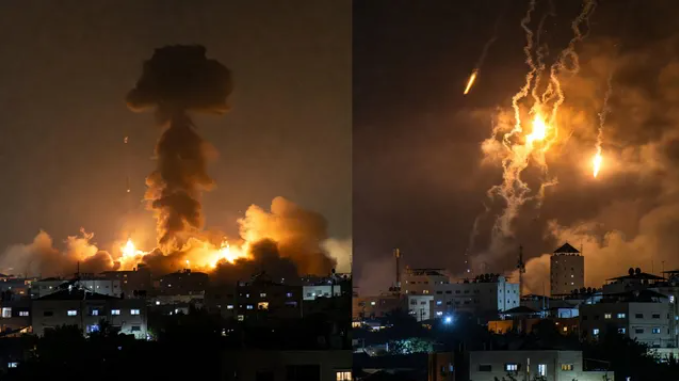
The US carried out a seventh consecutive night of strikes on Iran as Tehran launched renewed attacks across Gulf states, escalating Middle East tensions.

US Attacks Iran for Seventh Consecutive Night as Tehran Warns: ‘No Border Will Remain Safe if Strikes Continue’
Washington/Tehran: Tensions between the United States and Iran have intensified further after the US military carried out another round of strikes on Iran, marking the seventh consecutive night of American military operations against the country.
The US military confirmed the latest strikes on Friday, continuing a campaign that has significantly increased fears of a wider conflict across the Middle East. Specific details about all the targets and the full extent of damage from the latest operation were not immediately disclosed.
Iran Responds With Renewed Attacks
Iran responded to the continuing US strikes by launching renewed attacks targeting Gulf states allied with Washington. According to Reuters, the latest escalation involved attacks affecting Bahrain, Qatar, Kuwait and Jordan, while maritime tensions also intensified around strategically important regional shipping routes.
The escalating exchange of attacks has raised concerns that the conflict could spread further across the region, particularly as several Gulf countries host US military facilities or maintain close strategic relationships with Washington.
Strait of Hormuz Remains a Major Flashpoint
The Strait of Hormuz has emerged as one of the most sensitive points in the escalating confrontation. The strategically vital waterway plays a crucial role in global energy supplies, and disruption to shipping through the region could have significant consequences for international oil markets.
Recent developments have included growing tensions over commercial shipping and navigation through the region, increasing concerns about the security of global energy transportation.
Conflict Raises Concerns Across the Gulf
The latest military escalation is creating growing concern among countries across the Gulf. With attacks and counterattacks expanding beyond the immediate borders of Iran, governments in the region face increasing security challenges.
The conflict has already affected infrastructure and disrupted normal activity in parts of the region. Continued escalation could pose further risks to civilian infrastructure, transportation networks and energy facilities.
Oil Markets Under Pressure
The US-Iran confrontation is also affecting global energy markets. Reuters reported that oil prices rose by more than 4% amid the latest escalation, reflecting concerns about potential disruptions to supplies and shipping routes.
Any prolonged disruption in and around the Strait of Hormuz could have broader implications for countries dependent on energy imports, potentially increasing pressure on global fuel prices.
What Happens Next?
The seventh consecutive night of US strikes demonstrates that the military confrontation remains active despite international concerns about further escalation.
With Iran continuing retaliatory operations and tensions spreading across the Gulf, attention is now focused on whether diplomatic efforts can prevent a broader regional conflict.
The coming days could prove critical. Further strikes by either side may increase the risk of additional countries becoming directly affected by the confrontation, while any disruption to major energy routes could have consequences far beyond the Middle East.