

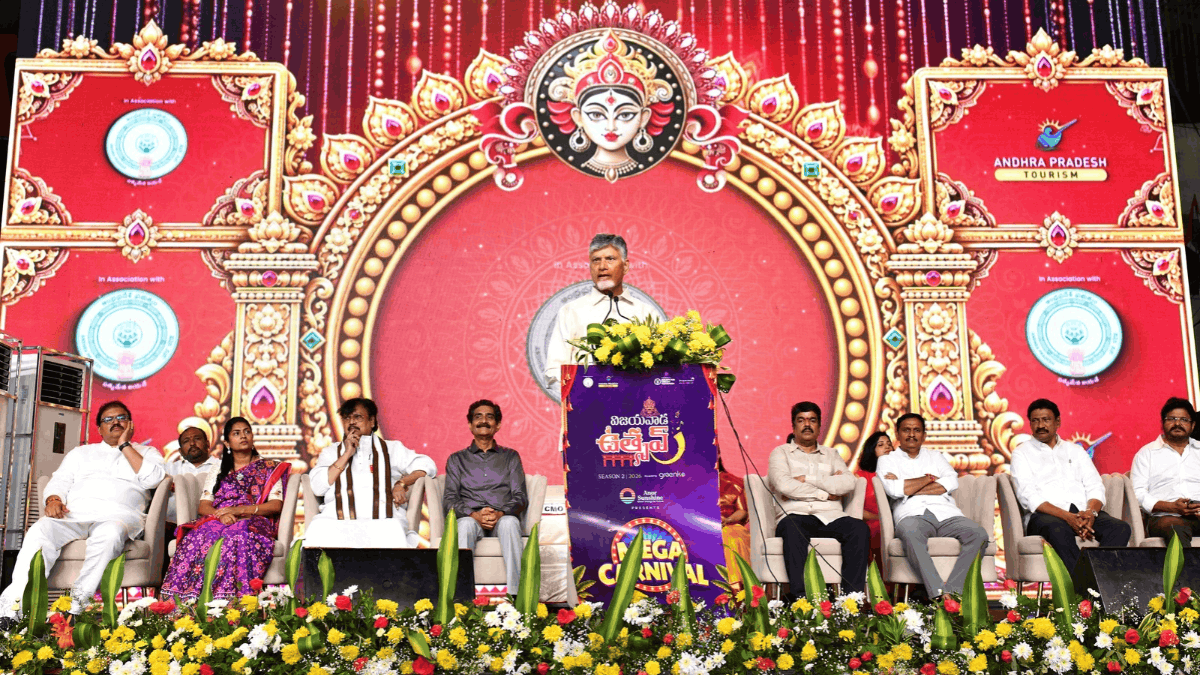
Andhra Pradesh Chief Minister N. Chandrababu Naidu recently leveraged the Vijayawada Utsav during the Sharannavaratri festivities to present a softer cultural image while continuing to emphasize his role as a leader focused on farmers and rural development.
Vijayawada Utsav Inspired by Mysuru Dusshera
The government modeled the Vijayawada Utsav on the grand Mysuru Dusshera celebration, blending spiritual and cultural pride with political strategy. Over the 10-day event, Vijayawada was promoted as Andhra Pradesh’s spiritual and cultural capital, complementing the administrative role assigned to Amaravati.
The celebrations centered around Goddess Kanaka Durga worship at Indrakeeladri hill, paralleling Mysore’s worship of Goddess Chamundeshwari. The festival featured classical art forms, folk performances, and handicraft exhibitions involving 650 women’s self-help groups (SHGs) and 1,500 artisans.
Integration of SARAS Mela Boosts Rural Artisans
For the first time, Naidu co-hosted the Dussehra festival with the national SARAS Mela, which was relocated from Delhi to Vijayawada’s Punnami Ghat on the Krishna River. Backed by the Ministry of Rural Development and regional bodies like the Society for Elimination of Rural Poverty (SERP), the event highlighted rural economic empowerment.
Cultural and Political Outreach
Naidu used the festival’s platform to propose a river-linking project in collaboration with Tamil Nadu Chief Minister Joseph Vijay, reinforcing his image as a statesman. This initiative aims to tackle drought issues regionally and demonstrates political diplomacy.
Political visitors included President Droupadi Murmu, Madhya Pradesh CM Mohan Yadav, Mizoram CM Lalduhoma, and a Chinese delegation. Invitations were also extended to chief ministers of Telangana, Odisha, Karnataka, and Uttar Pradesh. Lalduhoma sought Andhra’s assistance for youth employment opportunities in Mizoram.
Emphasis on Rural Women’s Empowerment
During the event, Naidu launched the ‘Swayam AP’ brand to empower rural women as wealth creators, setting a goal to uplift an additional five lakh women by 2029. This initiative underscores his commitment to merging economic policies with grassroots populism.
Experts note Naidu’s strategic use of religious and cultural symbolism to promote his ‘Nine Cities’ concept centered on spiritual tourism and the Vijayawada Durga temple. His approach excludes alliance partners prominently, signaling political autonomy over the event.
Political Implications and Future Outlook
The Utsav marked a political transition for Naidu’s son, Nara Lokesh, who played a diplomatic role by hosting dignitaries, indicating Vijayawada and Amaravati’s emerging significance beyond investment hubs to arenas of political engagement.
Naidu also addressed the emotional and psychological stresses caused by modern technology, emphasizing that the festival’s spiritual aspects help people find mental relief. The Prime Minister Narendra Modi’s letter encouraging the festival’s success and focus on skill development further elevated its profile.