
Meghalaya Farmers Turn Exporters: Ri-Bhoi Organic Collective’s Success Story
A 433-member organic farmers' producer company in Meghalaya's Ri-Bhoi district has transformed small farmers into successful exporters through collective farming.
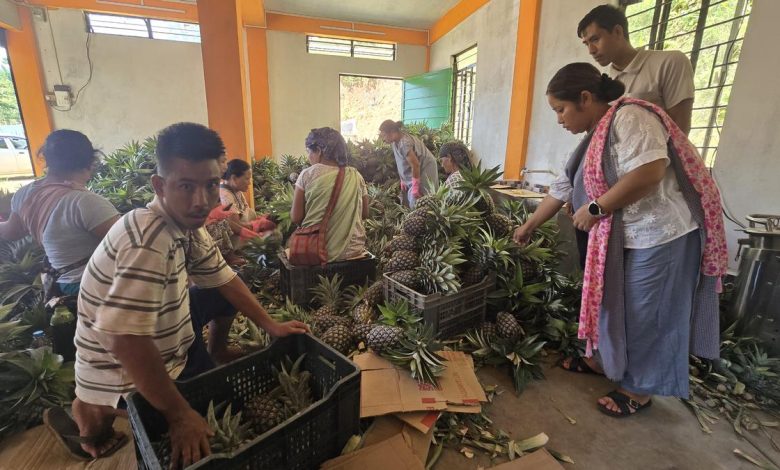
Discover how Meghalaya’s Ri-Bhoi organic farmers transformed from roadside vendors to exporters through collective farming, boosting incomes and sustainable agriculture.

Ri-Bhoi, Meghalaya – A remarkable transformation is underway in the agrarian landscape of Meghalaya’s Ri-Bhoi district, where a 433-member organic farmers’ producer company based in Jirang has emerged as a shining example of successful farm collectivization. This collective approach to agriculture is not only bolstering the livelihoods of individual farmers but also setting new benchmarks in sustainable farming practices across the region.
The Jirang-based farmers’ producer company was formed with the intent to unify small-scale organic farmers, enabling them to pool their resources, knowledge, and marketing efforts. Traditionally, farmers in this region struggled with fragmented operations and limited market access, which often led to low incomes and crop wastage. However, through collectivization, these farmers now have improved bargaining power and enhanced access to both local and international markets.
Organic farming, which emphasizes the use of natural inputs and eschews chemical fertilizers and pesticides, has seen increasing demand globally. The Jirang farmers’ collective capitalized on this trend by ensuring strict quality control measures, certification, and capacity building among its members. The collective’s commitment to organics not only aligns with global sustainability goals but also promises healthier produce for consumers.
Officials from the district administration have lauded the success of this farmers’ company, noting that it stands as a blueprint for other districts wanting to replicate the model. The initiative has also attracted attention from agricultural experts and government agencies, which are exploring ways to provide further support through subsidies, training, and infrastructure development.
Members of the producer company reported significant improvements in their income and quality of life. By collectively marketing their produce, they have accessed better pricing structures, reduced dependence on middlemen, and minimized exploitation. This has led to a cycle of reinvestment in their farms, adoption of advanced organic techniques, and expansion of their cultivated areas.
The journey of the Jirang farmers highlights the power of unity and shared vision in rural communities seeking economic empowerment through agriculture. Their success story also underscores the potential of organic farming not just as a lifestyle choice but as a viable and scalable economic model.
Looking ahead, the collective plans to diversify into value-added products, explore export opportunities, and collaborate with research institutions to further refine their organic practices. If sustained, this model promises to play a crucial role in Meghalaya’s journey towards inclusive and sustainable rural development.
As the Jirang farmers continue to reap the fruits of their hard work, their story serves as an inspiration for other farming communities across India and beyond, proving that with organization, quality focus, and perseverance, grassroots agriculture can achieve remarkable success.