

Kochi, Kerala
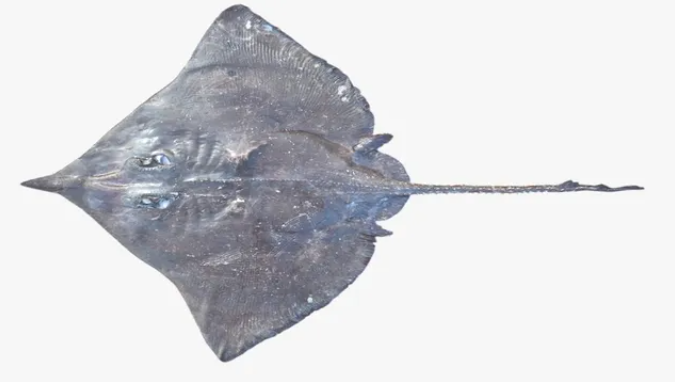
Indian scientists have made a significant breakthrough in the study of marine biodiversity. Scientists from the Zoological Survey of India (ZSI), in collaboration with the ICAR-Central Marine Fisheries Research Institute and international experts, have identified a new species of deep-sea skate in the Arabian Sea. The species has been scientifically named Dipturus dhritiae and is being referred to as the Arabian Skate.
Specimens of the new species were discovered at depths ranging from 400 to 600 metres in waters off the Kerala coast and near the Wadge Bank region. According to scientists, the species can reach a maximum known length of approximately 131.5 centimetres. One of its key physical characteristics is the presence of five distinct rows of spines along its tail.
An Important Discovery Under the Deep Ocean Mission
According to the ZSI, the discovery was made during marine surveys conducted under the Ministry of Earth Sciences’ ambitious Deep Ocean Mission. The research was carried out as part of the project “Deep-Sea Chondrichthyans of India: Taxonomy, Distribution, Biology and Current Status.”
The project aims to generate detailed scientific information about cartilaginous fishes such as sharks, rays and skates found in India’s deep-sea regions. Researchers are studying their species diversity, geographical distribution, biology and current conservation status.
To confirm the identity of the new species, scientists examined its external and anatomical characteristics along with molecular and genetic data. The complete mitochondrial genome of the specimen was sequenced. The findings showed that the species is genetically distinct from its close relative, Dipturus johannisdavisi, commonly known as the Travancore Skate.
Genetic sequence comparisons revealed a difference of approximately 3.8 to 4.7 percent between the two species. This genetic evidence played a crucial role in establishing Dipturus dhritiae as a distinct species.
Misidentified for More Than Four Decades
Scientists said that the identity of Dipturus dhritiae had remained unclear for many years. For more than four decades, it had been identified as Dipturus springeri.
The species has also been unintentionally caught as bycatch in the nets of commercial deep-sea shrimp trawlers. Such accidental catches highlight the importance of accurately identifying deep-sea species and assessing their population status.
Experts emphasise that accurate species identification is essential for protecting deep-sea biodiversity. Sharks, rays and skates generally have relatively slow reproductive rates and long life cycles. As a result, populations can take a considerable amount of time to recover after experiencing significant declines.
Species Named in Honour of Dhriti Banerjee
The new species has been named Dipturus dhritiae in honour of Dr Dhriti Banerjee, the first woman Director of the Zoological Survey of India.
Dr Banerjee noted that a vast portion of the deep ocean remains unexplored from a scientific perspective. She said that every marine survey provides an important opportunity to improve understanding of marine biodiversity.
She also highlighted the vulnerability of deep-sea sharks and rays to overexploitation. These species can also be accidentally caught during commercial fishing operations. Therefore, timely species identification, population assessment and conservation measures are essential.
The research team included Dr KK Bineesh and Anil Kasinath from the ZSI, Akhilesh KV from the ICAR-Central Marine Fisheries Research Institute, and Dr David A. Ebert from the United States.
As part of the same research effort, scientists have also identified and mapped the Kollam Slope Important Shark and Ray Area within India’s Exclusive Economic Zone.
According to the ZSI, taxonomic and genetic studies of sharks, rays and skates in Indian waters will continue under the Deep Ocean Mission. The findings are expected to contribute to a better understanding of India’s deep-sea ecosystems and support future marine conservation efforts.