

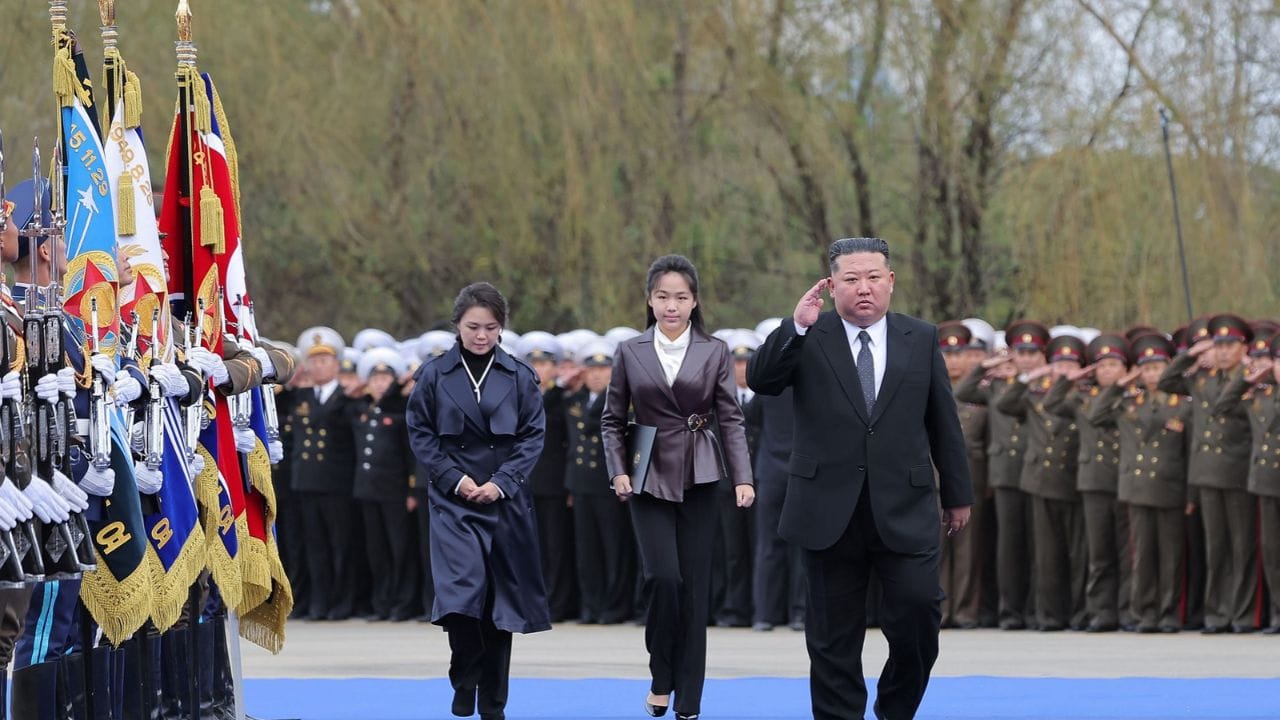
Intelligence agencies have disclosed a startling possibility shaping North Korea’s future: Kim Jong Un appears to be grooming his daughter Kim Ju-ae as the heir to the throne, prompting high-level speculation about who would inherit the regime in Pyongyang. The claim centers on a quiet but growing narrative within the country’s ruling circles.
Public appearances by Kim Ju-ae alongside her father at military events, missile tests, and overseas trips have intensified talk of a planned succession. In a system where the Kim family is revered as almost divine, the young daughter’s visibility fuels the belief that she is being positioned for a future role, even as officials utter few direct statements.
Could Kim Ju-ae Be North Korea’s Next Leader?
Analysts say the Kim dynasty is treated less as a political lineage and more as a quasi-religious order, where bloodlines matter more than gender. The alleged plan to place Kim Ju-ae in key roles with the army and the ruling party would aim to secure a peaceful transition should health issues or other concerns arise.
Experts caution that gender does not automatically block ascension in North Korea, where bloodline matters more than gender in power politics. Still, Kim Yo-jong, Kim Jong Un’s formidable sister, is considered a potent rival who could complicate any handover if publicly challenged or if a disputed succession emerges, particularly if the leader’s health falters.
What the Rumors Mean for Regional Security
North Korea already possesses nuclear weapons and governs a population of about 26 million. A smooth transition to Kim Ju-ae would have significant implications for regional security and the stability of East Asia and beyond. Observers caution that any signs of instability or a contested succession could heighten tensions with both allies and adversaries.
Until officials confirm, the reports remain as speculation based on intelligence leaks and the public visibility of Kim Ju-ae. The possibility of a peaceful transition would depend on controlling factions within the military and the ruling party, plus the stance of Kim Yo-jong, who wields influence over security and propaganda.
Analysts note that both Moscow and Pyongyang appear to be guiding the framing of the succession to avoid upheaval, signaling the importance of international recognition in any transition. As Washington, Seoul, and allied capitals monitor the situation, the question remains whether Kim Ju-ae’s ascent would be accepted internally and accepted by outside powers.
Officials have not confirmed the reports, and many details remain unknown. The publicly visible role of Kim Ju-ae and the secrecy surrounding Pyongyang’s power structure mean readers should await official confirmation before drawing conclusions about a hereditary handover within the Kim family. Until then, the international community will watch carefully for any official statements, changes in staffing, or shifts in public messaging from North Korea.