

New Delhi, Delhi
India will celebrate its 80th Independence Day on August 15, 2026, marking 79 years since the country became independent from British rule in 1947. However, the date of independence was not originally expected to be so early. The British government had initially announced that power would be transferred in India by June 1948.
So, why did India gain independence almost 10 months earlier, on August 15, 1947?
The answer lies in the rapidly deteriorating political situation, growing communal violence and the failure of the Indian National Congress and the Muslim League to reach an agreement on the future political structure of the country.
Congress, Muslim League and the Growing Political Crisis
After World War II, Britain was economically and politically weakened. At the same time, pressure for an end to British rule was increasing across India. In 1946, the British government sent the Cabinet Mission to India to find a constitutional solution and work out a framework for the transfer of power.
The Congress and the Muslim League held extensive discussions, but their differences remained unresolved. The Muslim League, led by Muhammad Ali Jinnah, continued to demand a separate state for Muslims.
On August 16, 1946, the Muslim League observed Direct Action Day. Large-scale communal violence broke out in Calcutta, followed by further violence and tensions in places including Noakhali, Bihar and Punjab. The worsening situation made the prospects of a negotiated political settlement increasingly difficult.
Why Was June 1948 Set as the Deadline?
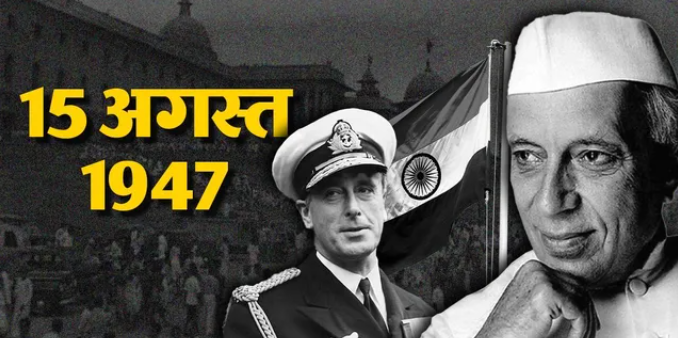
On February 20, 1947, British Prime Minister Clement Attlee announced that Britain would transfer power in India no later than June 1948. Lord Louis Mountbatten was subsequently appointed the last Viceroy of British India and arrived in the country in March 1947.
Mountbatten began discussions with Congress, the Muslim League and other political leaders. His immediate challenges were to find a political solution and prevent the worsening communal situation from turning into an even larger crisis.
As negotiations failed to produce an agreement on keeping India united, the possibility of partition became increasingly likely. Mountbatten concluded that delaying the transfer of power until June 1948 could create further instability.
The June 3 Plan Changed the Timeline
On June 3, 1947, Mountbatten announced the plan that provided the framework for partition and the transfer of power. British India was to be divided into two dominions, India and Pakistan.
The British Parliament subsequently passed the Indian Independence Act, 1947. The legislation provided the legal framework for establishing India and Pakistan as independent dominions. The date for the transfer of power was set for August 15, 1947.
Thus, a deadline that had originally extended to June 1948 was brought forward by nearly 10 months.
Why Was August 15 Chosen?
August 15 was selected by Mountbatten as the date for the transfer of power. There has been considerable historical discussion about why this particular date was chosen.
One commonly cited explanation connects the date with Japan’s surrender in World War II on August 15, 1945. Mountbatten had been closely associated with the Allied command in Southeast Asia during the war. However, historians caution against reducing the choice of August 15 to this single explanation, as the decision was part of a broader political and administrative process.
India became independent at midnight between August 14 and 15, 1947. Jawaharlal Nehru addressed the Constituent Assembly during the historic midnight session, marking the beginning of independent India.
Independence Came With the Trauma of Partition
The early transfer of power brought freedom, but it also came with the partition of British India. The creation of India and Pakistan triggered widespread communal violence and one of the largest mass migrations in modern history. Millions of people were forced to leave their homes and move across the newly created borders.
For India, therefore, August 15, 1947, represented both a historic triumph and a deeply painful transition. It marked the end of nearly two centuries of British colonial rule while coinciding with the enormous human suffering caused by Partition.
Today, Independence Day is celebrated across India as a national occasion commemorating freedom, sovereignty and the country’s democratic journey. The decision to bring forward the transfer of power from June 1948 to August 15, 1947, remains one of the defining turning points in the final chapter of British rule in India.