

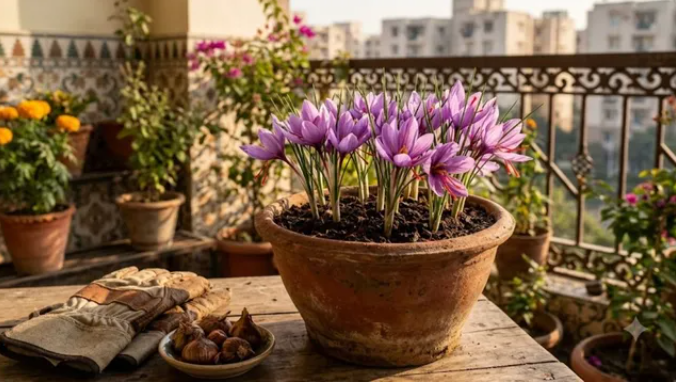
New Delhi, Delhi. Saffron holds a special place among Indian spices. Used in sweets, milk, biryani and many traditional dishes, saffron is known for its distinctive aroma and natural colour. As one of the world’s most expensive spices, it comes with a high price tag, making regular use difficult for many families. However, gardening enthusiasts can try growing it in pots at home if they have healthy corms and suitable environmental conditions.
Saffron is obtained from the Crocus sativus plant. The delicate red threads found inside its flowers are carefully removed and dried. These dried threads are what we know as saffron. In India, saffron cultivation is more successful in colder regions. Therefore, growing it in warmer areas may require suitable weather conditions and a more controlled environment.
Healthy Corms Are the Most Important
Saffron is grown from corms rather than seeds. It is important to choose healthy and good-quality corms for planting. The corms should not have signs of fungal infection, rot or physical damage. Strong and healthy corms generally have a better chance of producing well-developed plants.
What Kind of Soil Does Saffron Need?
Saffron corms need well-draining soil that allows excess water to escape easily. Very heavy or constantly wet soil can damage the corms. For potting soil, regular garden soil can be mixed with coarse sand and well-rotted organic compost.
The pot should also have adequate drainage holes. Waterlogging can cause the corms to rot.
The Right Planting Method
Saffron corms can be planted at a depth of around 8 to 10 centimetres. While planting, keep the pointed end of the corm facing upward. If several corms are being planted in the same pot, leave enough space between them so the plants have room to grow.
After planting, water lightly. Avoid keeping the soil constantly wet or waterlogged.
Pay Attention to Light and Temperature
Saffron plants need sufficient light, but cool and suitable weather conditions are also important for their growth. In areas with extremely high temperatures, getting the plants to flower successfully can be difficult. Therefore, the planting season should be selected according to local weather conditions.
How Is Saffron Obtained From the Flowers?
Once the plants produce flowers, the delicate red threads inside them are carefully removed. These threads can then be dried and stored for later use. Since each flower produces only a very small amount of saffron, growing a few plants at home should not be expected to provide a large harvest.
Growing saffron at home can mainly be an enjoyable gardening experiment. With good soil, healthy corms, balanced watering and suitable weather conditions, it may be possible to grow plants that produce flowers.