

New Delhi, India
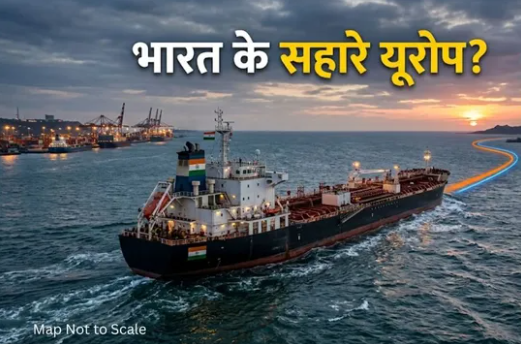
Amid a sharp decline in diesel supplies from Russia and weakening fuel shipments from the United States to Europe, India is emerging as an important source of diesel for the European market. India’s large refining capacity and strong ability to export petroleum products have given it a significant position in the changing global fuel supply chain.
According to Vortexa, a company that provides energy and maritime freight data, India accounted for around 60% of the diesel volumes moving from the Bab el-Mandeb Strait toward Europe in August. During the month, around 200,000 barrels per day of diesel were shipped toward Europe through this strategically important maritime route.
Notably, diesel flows through the Bab el-Mandeb route had almost come to a standstill in March and April. The recovery in August to levels close to those recorded a year earlier indicates that India’s role in supplying the European market has increased.
India’s Refining Capacity Emerges as a Major Strength
India is among the world’s major oil-refining hubs. The country has an installed refining capacity of around 258.1 million tonnes per year, which is higher than domestic fuel demand. This surplus capacity gives Indian refiners a competitive advantage in exporting petroleum products.
During the financial year 2025-26, India exported around 61.5 million tonnes of petroleum products. As diesel availability from some traditional suppliers declines in the global market, Indian refiners have an opportunity to increase their share in markets such as Europe.
However, the biggest challenge for India is the availability of crude oil. If refineries do not receive sufficient crude supplies, the amount of diesel available for exports could also be affected.
Crude Oil Imports Decline
According to Vortexa data, India’s inflow of crude oil and condensate fell for the second consecutive month in August to around 3.8 million barrels per day. A year earlier, the figure stood at approximately 4.8 million barrels per day.
This decline could affect petroleum product exports in the future. If crude oil supplies remain weak for an extended period, Indian refineries may have to balance domestic demand with export requirements.
Russia’s Diesel Supplies Drop Sharply
Meanwhile, Russia has recorded a significant decline in seaborne exports of diesel and gasoil. During the first 25 days of August, Russia’s seaborne diesel and gasoil exports averaged around 150,000 barrels per day.
This was approximately 610,000 barrels per day lower than during the same period last year and around 81% below the five-year average. Ukrainian drone attacks on Russian refineries and oil-export infrastructure have also disrupted supply.
Several attacks on Russian refineries were reported in July and August. Operations at the Perm refinery, which has a capacity of around 260,000 barrels per day, were also affected following an attack. Exports from the Black Sea region have also faced disruptions.
US Supplies to Europe Also Showing Signs of Weakness
The United States had helped compensate for declining Russian supplies by providing diesel to Europe, but shipments from the US now also appear to be weakening. In August, the US accounted for around half of Europe’s seaborne diesel imports originating from outside the region.
Meanwhile, supplies of refined petroleum products through the Strait of Hormuz have also failed to provide the expected relief. During the first 27 days of August, only 37 movements of clean petroleum products were recorded involving MR2 or larger tankers. This compares with 55 movements in July and 69 in June.
Ship-to-ship transfers of oil continue off the coast of Oman, but these primarily involve crude oil. The movement of refined petroleum products has also declined compared with June.
Why Is India Becoming Important for Europe?
With supplies from Russia declining, US shipments weakening and availability through other maritime routes remaining limited, India has become an increasingly important alternative source of diesel for Europe. The country’s large refining capacity and experience in exporting petroleum products are giving Indian refiners an advantage in the current environment.
However, India’s future role will depend largely on the availability of crude oil for its refineries and the direction of global diesel demand.
For now, supply dynamics in the global diesel market are undergoing a major shift, and amid these changing conditions, ‘Made in India’ diesel is emerging as an important source of support for the European market.