

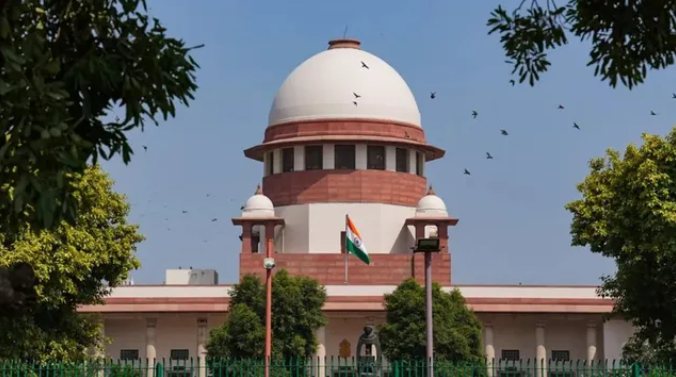
New Delhi: The Supreme Court has issued strict directions to states and Union Territories regarding missing persons and efforts to prevent human trafficking. The court clarified that an FIR must be registered immediately whenever a person is reported missing, regardless of age or gender.
A bench comprising Justices Ahsanuddin Amanullah and R. Mahadevan expressed concern over the interpretation of an earlier court direction by some states. The bench noted that certain authorities appeared to have understood the order as applying only to missing children.
The Supreme Court rejected this interpretation and made it clear that its directions apply to all missing persons, not just children.
Supreme Court Flags Misinterpretation of Earlier Order
The court emphasised that the initial hours and days after a person goes missing can be crucial for tracing them and investigating the circumstances surrounding their disappearance.
Immediate registration of an FIR allows the police investigation to formally begin and enables authorities to take appropriate steps to locate the missing person.
The bench indicated that delaying registration or placing a missing-person complaint under another category could affect timely police action. Authorities have therefore been directed to follow the prescribed procedure without unnecessary delay.
The Supreme Court also stressed that its May 22 order must be followed by all states and Union Territories.
Chief Secretaries and DGPs Face Contempt Warning
The court warned that failure to comply with its directions could result in serious consequences for senior officials.
If a state or Union Territory fails to implement the order, the concerned Chief Secretary and Director General of Police (DGP) could face contempt proceedings.
Officials may also be required to appear personally before the Supreme Court and explain any failure to comply with the directions.
Court Seeks Faster Action in Missing-Person Cases
The Supreme Court’s intervention is significant in the context of missing-person cases, particularly because delays in reporting and investigation can make it more difficult to trace vulnerable individuals and identify possible human trafficking networks.
By directing authorities to register FIRs immediately in missing-person cases, the court has sought to establish a uniform approach across the country and ensure that complaints receive prompt police attention.
The order places responsibility on state and Union Territory authorities to ensure that police machinery responds quickly whenever a person is reported missing.
The Supreme Court has also sent a strong message that procedural delays or restrictive interpretations of its directions will not be accepted, reinforcing the need for prompt and effective action in every missing-person case.