
Congress Criticizes Modi Government Over CBSE’s Reversal on Three-Language Formula
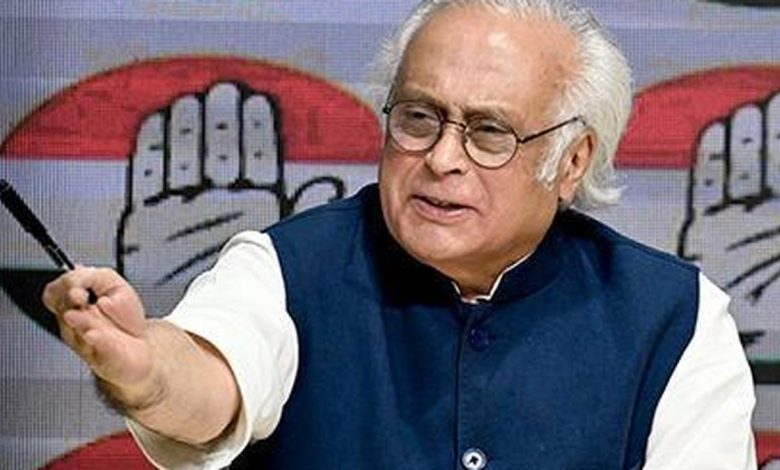
In a bold statement made on X, Congress General Secretary Jairam Ramesh has called for the resignation of Education Minister Dharmendra Pradhan. The demand comes amid the controversy surrounding the Central Board of Secondary Education’s (CBSE) recent reversal on its stance regarding the three-language formula.

The three-language formula, a long-standing educational policy in India, aims to promote multilingual proficiency among students by encouraging the learning of three languages, including a regional language, Hindi, and English. However, recent developments have sparked widespread debate and criticism, especially from opposition parties.
On X, Jairam Ramesh accused the Modi government of abandoning its commitment to a balanced language policy by allowing CBSE to roll back on the three-language formula. He argued that this ‘U-turn’ undermines India’s rich linguistic diversity and threatens the inclusive vision of education envisioned by the constitution.
“It is deeply disturbing to see the government retreating from policies that promote unity in diversity,” Ramesh stated. “The education minister should be held accountable for decisions that could alienate many students and set back the cause of linguistic harmony.”
Education Minister Dharmendra Pradhan, responding to the allegations, defended the decision by emphasizing the need for flexibility in the curriculum to adapt to regional aspirations. He highlighted the government’s commitment to improving educational standards while respecting local languages and cultures.
Experts on education policy have weighed in on the matter as well. Some analysts suggest that the government’s stance may reflect a pragmatic approach to streamline curricula across diverse state boards. Others fear that it could lead to increased marginalization of certain languages, particularly regional tongues.
The three-language formula has historically been a subject of political contention in India. While it aims to foster national integration, its implementation has often faced challenges due to linguistic diversity and regional sensitivities. The current reversal by CBSE has reignited these debates, prompting calls for a more inclusive and well-considered approach.
Opposition parties have seized on the issue, framing it as an example of the Modi government’s disregard for minority rights and regional identities. Demonstrations and discussions in parliament have intensified, highlighting the political and social implications of educational policy decisions.
As the controversy unfolds, students, parents, and educators alike await clarity on how the three-language formula will be applied in future academic sessions. The demand for Education Minister Dharmendra Pradhan’s resignation by Jairam Ramesh symbolizes a broader call for accountability and transparency in policymaking.
With India’s diverse linguistic landscape at stake, the government faces pressure to reconcile efficiency in education with the preservation of cultural and linguistic plurality. The evolving situation will likely influence not only educational strategies but also wider political discourse in the months ahead.