

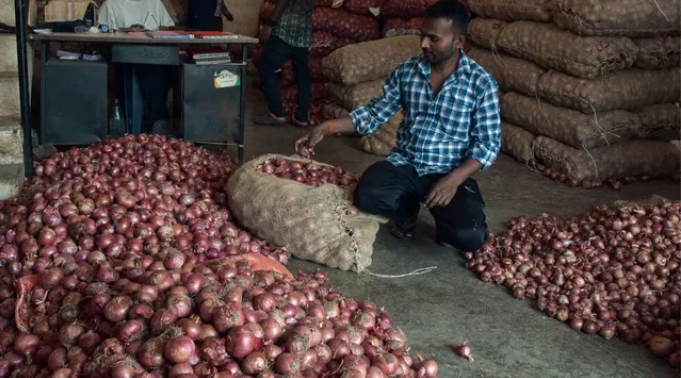
New Delhi, Delhi. The kitchen budget of the common man may once again come under pressure. Nearly 30 percent of the onion buffer stock purchased during the summer season has reportedly been damaged due to rotting and sprouting. At the same time, delays in kharif onion sowing have raised concerns about lower market supply and a possible increase in prices in the coming months.
To control rising onion prices, the central government has taken steps to increase supplies in Delhi. A special train, named the ‘Kanda Express’, carrying around 500 tonnes of onions, has departed from Lasalgaon for Delhi. According to railway officials, the train was initially scheduled to leave on Tuesday but was delayed by around 24 hours due to additional time required for the grading and sorting of onions.
According to a senior NAFED official, the main reason for the higher level of onion spoilage this year was unseasonal rainfall during the harvesting period. The rain affected the quality of onions and reduced their shelf life, making long-term storage more difficult. Normally, around 20 percent of onions are damaged every year, but the losses are expected to be higher this time.
After retail onion prices reached between Rs 50 and Rs 65 per kilogram in several cities, the central government intensified its intervention in the market. Apart from transporting onions by rail, NAFED and NCCF are also increasing supplies to Delhi and other major consumption centres through road transport.
The Ministry of Consumer Affairs had earlier stated that onions arriving in Delhi through the Kanda Express would be sold at a subsidised rate of Rs 35 per kilogram through outlets operated by NAFED, NCCF and Kendriya Bhandar. The government is also planning to send onions by rail to cities such as Chennai, Ernakulam, Madurai and Guwahati.
The shortage of buffer stock has emerged as another major concern. The central government had set a target of procuring 200,000 tonnes of onions during the summer season, but NAFED and NCCF together were able to procure only around 120,000 tonnes. Of this quantity, nearly 30 percent has reportedly already been damaged.
The old onion stock held by farmers is also declining rapidly. Due to the risk of spoilage, many farmers sold their onions in the market during June and July. Meanwhile, better prices in wholesale markets encouraged several farmers to sell directly in the open market instead of supplying onions to government procurement agencies.
Delays in the kharif onion crop have further increased concerns for the coming months. According to agricultural officials, fresh kharif onion stocks are expected to reach markets by the middle of November, while regular arrivals may begin in early December. This means that the market will largely depend on stored summer onions during September and October.
Officials have warned that if the existing stock continues to deteriorate at the current pace or runs out earlier than expected, onion availability could decline significantly in September and October. Such a situation could increase pressure on both wholesale and retail markets, forcing ordinary consumers to pay higher prices for onions.