

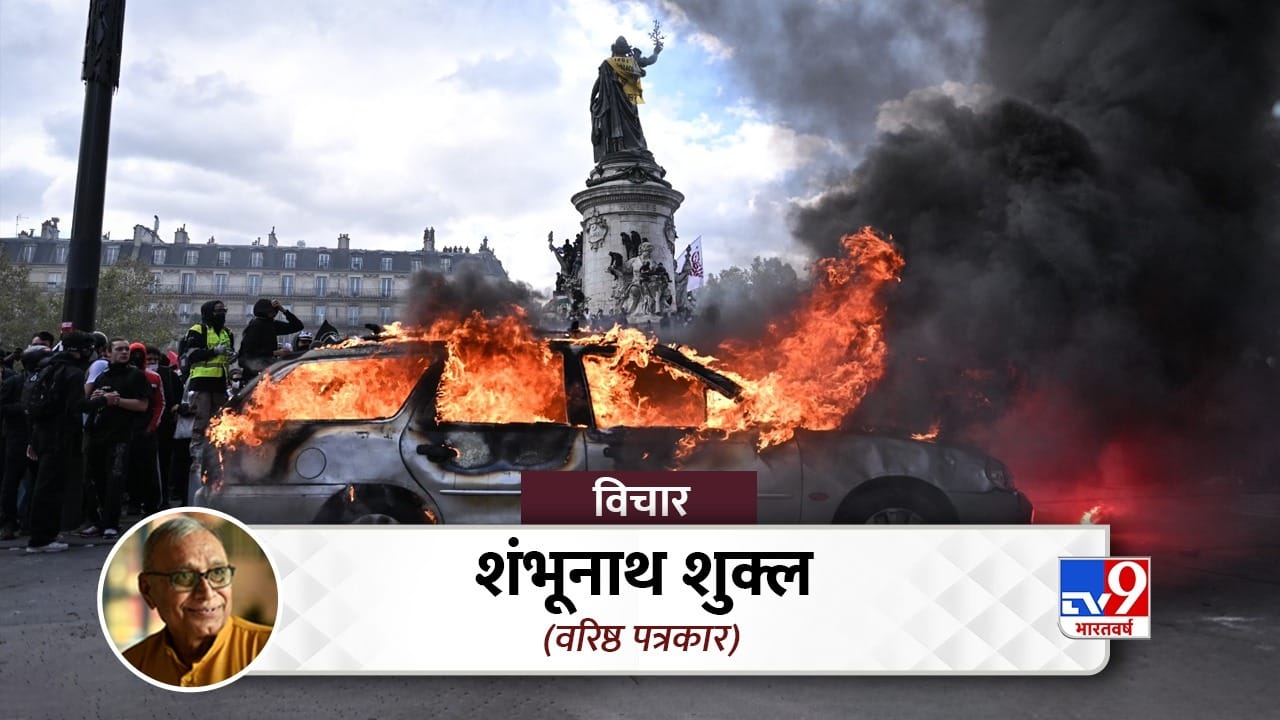
Across Europe, nations once hailed for revolutions and liberties are engulfed in unrest. France, a country that pioneered the state revolution and the emancipation of slaves, now witnesses widespread protests and turmoil. Italy, Portugal, Belgium, and several other European countries are experiencing similar turmoil. Despite varied governments—some right-wing, others liberal—the social upheaval continues unabated with police often resorting to force.
Economic and Social Strains Fueling Unrest
The reasons behind this chaos are complex. Some attribute it to the growing Muslim population and religious tensions, while others blame rampant inflation, education budget cuts, and deteriorating public services. Numerous schools face teacher shortages, with classrooms overcrowded to 60 students. Free education is being phased out, straining middle-class finances and creating widespread dissatisfaction.
The ongoing conflict between Ukraine and Russia has further strained European economies. NATO members have diverted significant funds to support Ukraine, impacting domestic budgets. Meanwhile, European manufacturing, such as Italy’s automobile industry, faces stiff competition from China’s low-cost products, affecting economic growth and employment.
Additionally, proxy conflicts like the tensions between Iran and the US in the Hormuz Strait have caused energy crises. Europe cannot purchase oil directly, relying instead on India, which refines Russian oil to supply Europe. However, US-imposed tariffs have driven up the prices from India’s Jamnagar refinery, aggravating the fuel cost surge.
Energy Crisis and Declining Welfare Services
The spiraling costs of oil and natural gas in Europe have forced governments to reconsider public welfare programs. Education and free healthcare, once considered essential, are now seen as burdens, leading to budget cuts. Simultaneously, rising numbers of refugees and migrants have imposed additional pressure on housing and living costs, increasing rents and further straining citizens’ incomes.
Historically, European powers exploited raw materials from former colonies, turning those countries into dependent resources while enriching themselves. After World War II, this influence waned amid the rise of two superpowers: the USA and the Soviet Union. The global Cold War power balance eventually shifted with the Soviet Union’s dissolution in 1991, leaving America as the sole remaining superpower.
During this period, several countries—including India and Egypt—established the Non-Aligned Movement to avoid military entanglements with either superpower. While the USA led capitalist nations and the Soviet Union led Marxist countries, post-Soviet geopolitics saw America engaging in conflicts like Iraq in the 1990s and early 2000s, reshaping control in the Middle East and Africa.
The allure of America and wealthy European countries for better jobs and living conditions triggered widespread migration from Asia, Africa, and South America. These host countries offered free education, healthcare, and unemployment benefits. Over time, a bohemian lifestyle emerged among their youth, marked by less emphasis on traditional family structures, contributing to demographic shifts.
Consequently, affluent countries attracted skilled workers and migrants who benefited from generous welfare systems, educating their children and tapping into opportunities. However, this also led to social tensions as rising living costs and competition for resources made native populations uneasy. The resulting protests and civil unrest reflect underlying frustrations, indicating that these wealthy nations are now facing repercussions of their past policies and societal transformations.