

US Imposes New Tariffs on 60 Countries; India Receives Partial Relief with 10% Duty on Imports
Washington, D.C., United States

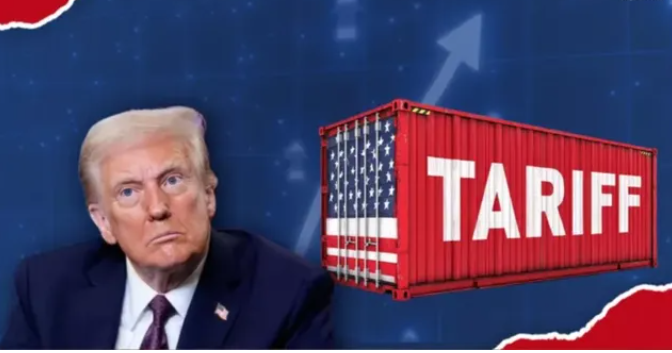
The United States has announced a major change to its trade policy by introducing new tariffs on imports from nearly 60 countries, including India. Under the decision announced by President Donald Trump’s administration, imported goods from various countries will face additional duties of up to 10% and 12.5%. According to the U.S. administration, the primary objective of this move is to enhance transparency in global supply chains and discourage trade in products manufactured using forced labour.
Under the new tariff structure, India has received relatively favorable treatment. Indian products have been placed in the 10% tariff category, while imports from several other countries will be subject to tariffs of up to 12.5%. Although the additional duty will affect Indian exporters, their competitive position may remain stronger than that of exporters from countries facing higher tariff rates.
The decision has been implemented under Section 301 of the U.S. Trade Act of 1974. According to the Office of the United States Trade Representative (USTR), the new tariff rates will take effect at 12:01 a.m. EDT on Friday. At the same time, the previously imposed temporary 10% global tariff will expire and be replaced by the new tariff framework.
The U.S. administration has also provided limited relief for importers whose shipments were already in transit before the announcement. Goods that arrive at U.S. ports by July 28 will not be subject to the new tariff rates. This exemption is intended to prevent unexpected financial burdens on products that had already been shipped before the policy change.
The White House and the USTR stated that the measure is not solely aimed at addressing trade imbalances. The administration also wants its trading partners to take stronger action against products suspected of being manufactured through forced labour or in violation of human rights. As part of this strategy, import tariffs are being used as an effective economic tool to promote responsible trade practices.
Trade experts believe that India’s inclusion in the 10% tariff category is a positive development. While certain industries—particularly manufacturing and export-oriented sectors—may experience higher costs, India’s position remains more favorable than that of countries facing the higher 12.5% tariff.
Indian exporters are now closely monitoring which product categories will be affected by the new U.S. policy and how bilateral trade relations between India and the United States evolve in the coming months. If Indian companies continue to maintain high standards of quality, competitive pricing, and reliable supply chains, their share in the U.S. market is expected to remain largely unaffected.
According to economic analysts, the coming months will provide greater clarity on the impact of the new U.S. tariff policy on global trade flows, international supply chains, and India-U.S. bilateral trade. For now, India’s placement in the lower 10% tariff category is being viewed as a welcome relief for the country’s export sector.