

Saffron Paint Controversy at Kolkata Academy of Fine Arts Sparks Protests, Theatre Artists Appeal to BJP Bengal Chief
Artists raise concerns over saffron paint at the Academy of Fine Arts security room, calling for the preservation of cultural spaces free from political symbolism.
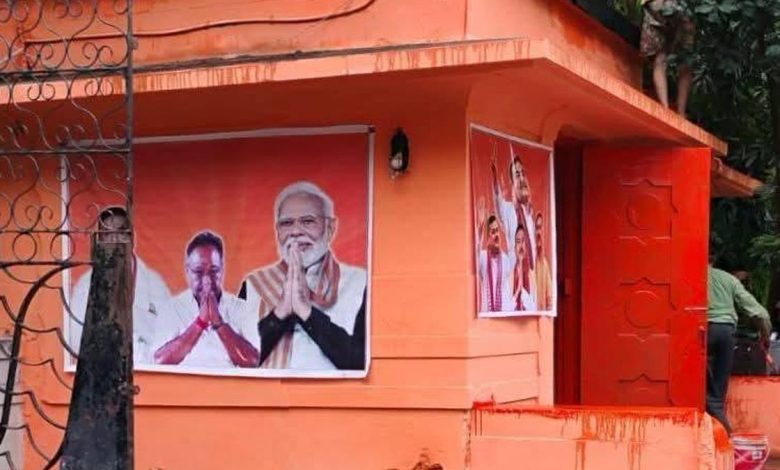
The saffron paint controversy at Kolkata’s Academy of Fine Arts has triggered protests, with theatre artists urging BJP Bengal leaders to preserve the institution’s cultural neutrality.

Since the Bharatiya Janata Party (BJP) assumed power in West Bengal in May, a noticeable transformation has been sweeping across government buildings, streets, and civic structures throughout the state. Among these changes, the recent painting of the Academy of Fine Arts’ security room in saffron has sparked significant controversy and protests.
The saffron paint, often associated with the BJP’s political identity, was applied to the walls of the security room, a move that theatre artists and cultural activists perceive as an attempt to politicize and appropriate spaces dedicated to art and culture. This alteration has not gone unnoticed and has drawn sharp criticism from several quarters, prompting a collective response from the artistic community.
Theatre artists, known for their deep affiliation with Bengal’s rich artistic heritage, have written an open letter to the BJP Bengal chief demanding an immediate reversal of the paint change. Their letter highlights concerns about the appropriation of neutral cultural spaces for political symbolism, emphasizing the importance of keeping such institutions free from partisan politics.
West Bengal has historically taken pride in its cultural diversity and the autonomy of its artistic institutions. The move to repaint government structures, including sections of the State Secretariat Nabanna, has raised questions about the intent behind these colour changes and their impact on public sentiment. Critics argue that such alterations may alienate citizens who view these icons as shared cultural assets rather than political statements.
Officials from the Academy of Fine Arts have yet to officially comment on the issue. Meanwhile, various political analysts suggest that the BJP’s colour-changing campaign across urban spaces might be part of a broader effort to establish a visible presence in a region traditionally dominated by other political forces.
Public reactions have been mixed, with some supporters applauding the fresh look as a sign of change, while many others express concern over what they describe as an unnecessary politicization of cultural landmarks. Civil society groups have called for dialogue to ensure that the cultural spirit of West Bengal remains intact and untainted by political symbolism.
As this controversy unfolds, attention remains focused on how the BJP government will navigate the balance between political representation and cultural sensitivity. The demands by theatre artists and cultural bodies indicate a strong desire to preserve the artistic integrity of institutions like the Academy of Fine Arts, reflecting broader anxieties about cultural identity in a rapidly evolving political landscape.