

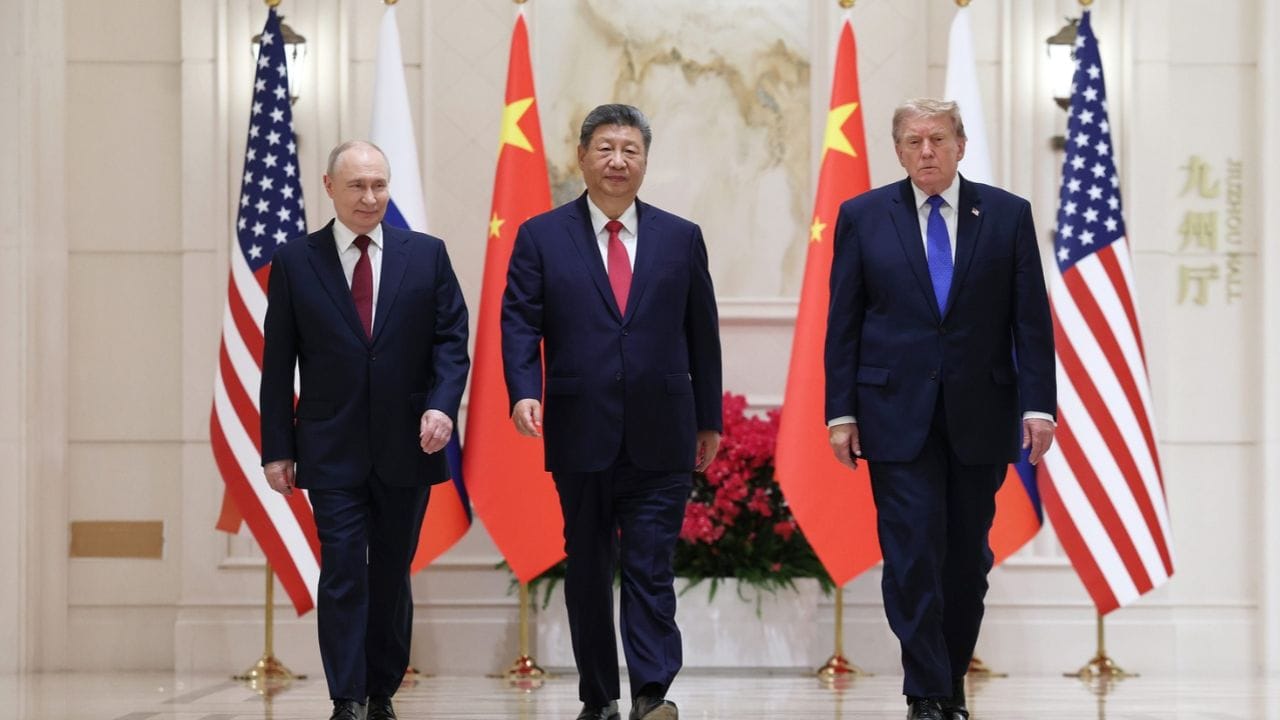
In Shenzhen, China, Donald Trump, Vladimir Putin, and Xi Jinping sat around a round table for the first trilateral meeting of its kind, a high-profile display that underscored a rare moment of direct engagement among three powers long viewed as adversaries. The gathering elevated Shenzhen as a diplomatic stage, signaling that the three leaders were serious about discussing global tensions and potential cooperation.
During the session, the three leaders displayed a surprisingly cordial chemistry, with Trump extending his hand to Xi on the escalator as a sign of goodwill. They discussed several pivotal topics, aiming to project unity while navigating long-standing rivalries and divergent interests. The moment underscored the delicate balancing act of diplomacy among them.
Five principal topics framed the talks, including attempts to address the Iran war, the Russia-Ukraine conflict, and efforts to curb the pace of nuclear arms development. They also examined the state of US-Chinese trade relations and discussed ways to end Russia’s diplomatic boycott, signaling a willingness to explore common ground despite deep frictions.
Iran war resolution formed the first agenda item, with participants signaling a push toward de-escalation and a pathway to settlement. The talks also touched on the broader Russia-Ukraine war, with the trio signaling openness to dialogue and possible milestones. They examined concepts to brake the nuclear arms race, seeking verifiable steps that could ease strategic tensions without clearly detailing mechanisms.
On the economic front, the talks sought to ease the long-running US-China trade frictions, with participants indicating interest in moving toward a conventional trade framework rather than renewed tariffs alone. They also confronted Russia’s diplomatic boycott and the economic penalties it has faced, exploring channels that might normalize ties while preserving countries’ strategic autonomy.
Taiwan emerged as a delicate touchstone, with Xi Jinping urging the United States to maintain a cautious stance and avoid overt moves that could destabilize ties. He urged Washington to refrain from steps that would undermine Beijing’s political and military sensitivities around Taiwan, signaling that even amid cooperation the Taiwan question remains a potential flashpoint.
Shenzhen as a Diplomatic Stage
Observers noted the choice of Shenzhen as a backdrop for the talks. The city’s rapid rise from a fishing village to a technology hub underscores China’s ability to project influence on the global stage. Some analysts say the Shenzhen meeting was a calculated move to showcase progress and shape international expectations, signaling Beijing’s deliberate use of economic prowess to bolster diplomacy.
Even as Trump, Putin, and Xi framed their dialogue as a path to peace, observers cautioned that substantial steps remain elusive. The leaders spoke of dialogue and restraint, but many questions about verification, enforcement, and timelines linger. The Shenzhen gathering, with its technical aura and symbolic staging, signals ambition—yet the real test will be concrete actions.