
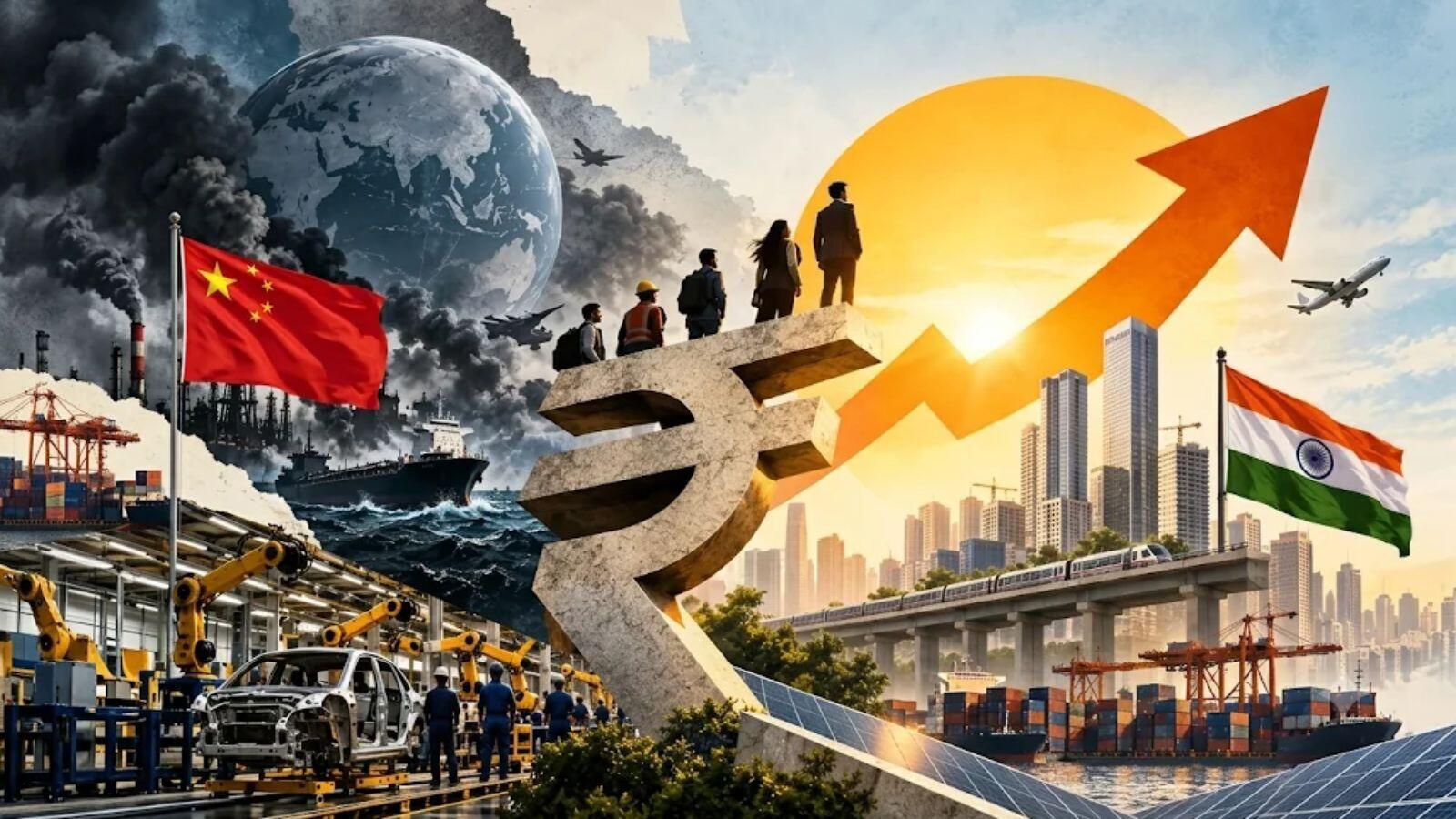
Moody’s has raised India’s FY 2026-27 GDP growth forecast from 6.5% to 7%, citing firm domestic demand, rising corporate investment and a faster pace in manufacturing. In its Global Macro Outlook 2027-28, Moody’s argues that India could stay about 3 percentage points ahead of China by 2028, reinforcing the view of a sustained domestic-led expansion.
According to Moody’s, India weathered global energy shocks and higher crude prices better than anticipated. The report highlights diversification of oil supplies and lower fuel burdens after reforms by state refiners and tax cuts intended to ease costs for households and businesses. The developments have helped preserve spending and investment momentum.
Overview of Moody’s Outlook
Data for April-June 2026 show a 7.8% expansion in GDP, marking one of the strongest quarterly readings in recent years. The growth is driven by a surge in investment, a rebound in manufacturing activity, and sustained domestic consumption, which together lifted overall output and supported production across multiple sectors.
Moody’s projects that India would retain its growth edge over China, estimating India’s GDP growth at 7% in 2028 while China slows to about 4%. The analysis suggests a three-point lead for India by 2028, underscoring the relative resilience of India’s domestic-driven expansion.
Momentum and Risks
China has faced a long slowdown with weak domestic demand and ongoing property sector distress weighing on investment. September 2026 retail sales rose by 1.1%, while real estate investment fell 20.6% in the first nine months of 2026, underscoring softer growth compared with India’s domestic demand and investment resilience.
Moody’s identifies a fresh round of private-sector investment as a key driver for India. Indicators point to rising production of machinery and capital goods, faster lending to industries, higher utilization of production capacity, and stronger activity in both manufacturing and services. If these trends persist, corporate expansion could bolster output and jobs.
However, Moody’s cautions that higher inflation could curb household spending, especially if prices of essential items jump. A weak monsoon and the El Niño climate pattern could dampen agriculture-related income in rural areas. If the RBI maintains tighter policy to fight inflation, borrowing costs could rise and private investment may slow.
Separately, SBI Research presents its own upbeat projection for FY 2026-27. It expects GDP growth of about 7.8% in the July-September 2026 quarter, with GVA growth between 8% and 8.2%. It also projects nominal GDP growth of 11% to 11.5%, underpinned by agriculture, industry and services across 54 indicators. Nominal GDP is forecast near $4.06 trillion, with PPP GDP at $19.19 trillion.