

Why West Bengal’s Linking of Social Security Benefits to SIR Faces Legal Challenges
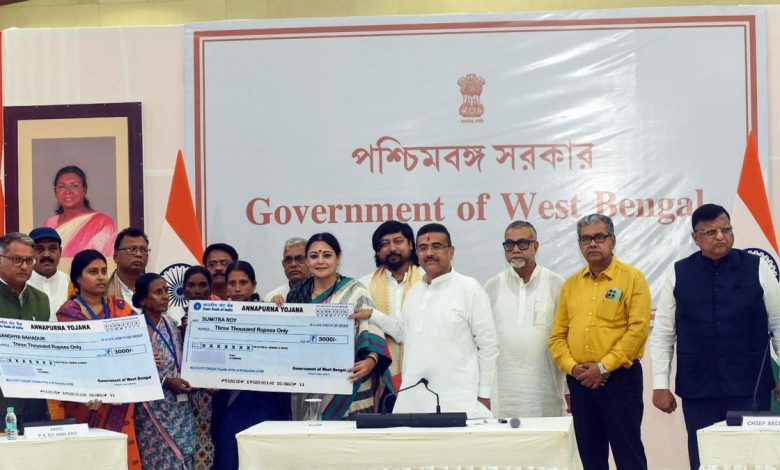
In a recent development in West Bengal, the decision to link the Public Distribution System (PDS) and Annapurna Yojana benefits to the outcomes of the Special Intensive Revision (SIR) has come under challenge by an independent trade union. This move has sparked significant debate, raising questions about the implications for vulnerable populations relying on these social security schemes.

The Special Intensive Revision is a state-led initiative aimed at updating and verifying beneficiary records to ensure the effective delivery of welfare services. While the objective behind the SIR is to eliminate duplication and fraud, its linkage with essential social security benefits like PDS and Annapurna Yojana has created unrest.
The independent trade union has voiced concerns that this linkage might unjustly deprive deserving individuals of critical benefits due to possible discrepancies in the revision process. According to union representatives, the SIR’s methodology may inadvertently exclude some genuine beneficiaries, especially among marginalized communities who may struggle with documentation or access to the revision process.
Public Distribution System and Annapurna Yojana play pivotal roles in providing subsidized food grains and nutritional support respectively, to economically disadvantaged groups. Any disruption in access to these benefits could exacerbate the challenges faced by low-income and elderly citizens.
State officials have defended their decision, emphasizing the need for accurate and updated beneficiary lists to improve targeting and reduce leakage in the welfare schemes. They argue that linking benefits to the SIR outcome will enhance transparency and ensure that benefits reach the intended recipients without duplication or fraud.
Legal experts suggest that the challenge brought forth by the trade union may center around issues of due process and the potential adverse impact on fundamental rights of beneficiaries. Courts may need to assess whether the state has put adequate safeguards in place to protect legitimate beneficiaries during the revision exercise.
As the case proceeds, all eyes will be on how West Bengal balances the imperative of efficient welfare delivery with safeguarding the rights and interests of its vulnerable populations. The outcome could set a precedent for other states considering similar policy measures tied to database revisions.
Ultimately, the debate highlights the complexity involved in managing social security programs in a populous and diverse state like West Bengal, where ensuring equity and inclusion remains a persistent challenge.